

Rustic Wedding Photo Editing Workflow: AI Tools and Tips for 2026
Table of contents
- What a Rustic Wedding Editing Workflow Needs to Solve
- Step 1: Import and Back Up the Full Gallery
- Step 2: Cull the Gallery Down to Keepers
- Step 3: Batch a Style-Matched Color Pass
- Step 4: Retouch the Portraits and Detail Shots
- Step 5: Finish the Hero Images by Hand
- Step 6: Export, Proof, and Deliver
- The 2026 Tool Landscape for Rustic Wedding Editing
- Building a Repeatable Rustic Wedding Pipeline
- Frequently Asked Questions
The fastest rustic wedding photo editing workflow in 2026 runs like a production line: you cull the full gallery, batch a style-matched color pass across every scene, retouch the portraits, then finish your hero frames by hand. AI handles the slow, repetitive stages so your active time drops from days to hours, while you keep creative control over the images that matter most. This guide walks the real editing process for rustic weddings, from import to delivery, and shows exactly where automation saves you time without changing the honest character of the day you photographed.
Rustic weddings are among the trickiest galleries a photographer edits. You move from open-field sun to deep shade under a timber roof to warm string lights and candle glow at the reception, often inside the same hour. A single rustic wedding can deliver 3,000 to 6,000 raw frames, and editing them entirely by hand takes 20 to 40 hours per gallery. A well-built AI workflow compresses that timeline while keeping your color and tone true to how you actually shoot.
What a Rustic Wedding Editing Workflow Needs to Solve
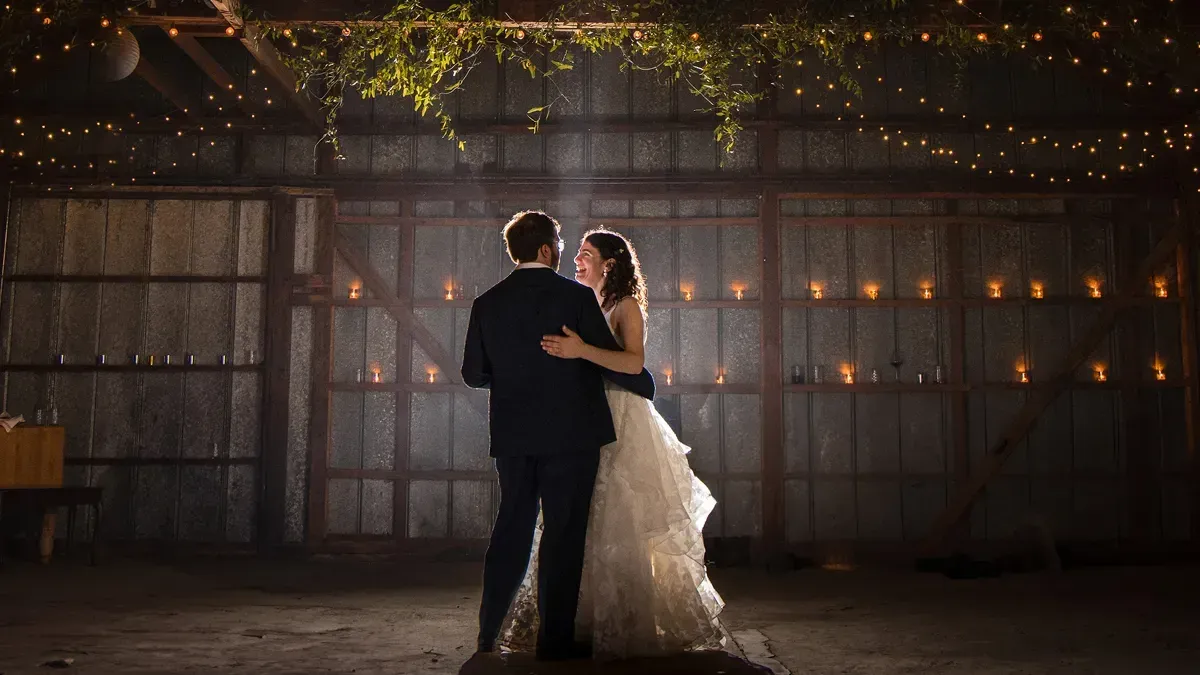
Before you touch a slider, it helps to name the problems a rustic gallery throws at you. Reclaimed wood, weathered barns, and dried florals absorb light and push warm tones, so skin can read orange under the rafters. Edison bulbs and lantern strings add a heavy amber cast, open doors create bright hotspots next to dark corners, and your white balance drifts across the day. A rustic workflow has to correct that mixed light, balance exposure between window and shadow, and hold one consistent look from ceremony to last dance.
AI editing helps most on consistency and volume, because it can carry a decision you make on one frame across hundreds of similar frames. That is the core reason a production-line approach works so well here. You define your look once, apply it in bulk, and reserve your hands for the frames that carry the album. For the hands-on companion to this piece, see our AI rustic wedding photo editing guide.
Step 1: Import and Back Up the Full Gallery
Every reliable workflow starts with a clean ingest. Pull every raw file into your catalog and protect it before you edit a single frame, because a rustic wedding is often a once-in-a-lifetime day you cannot reshoot. Getting the foundation right also makes every later step faster and safer.
- Import all raw files into Lightroom or Capture One and copy them to two separate drives before you begin.
- Rename and date the folder by couple and venue so you can find the archive months later.
- Group the gallery by scene, such as getting ready, ceremony, portraits, and reception, so batch settings apply cleanly.
- Flag any obvious test frames and lens caps so they never reach the culling stage.
This stage takes minutes, but it sets up the whole production line. When your frames are organized by scene, your batch color pass respects the light in each part of the day instead of averaging everything into one flat correction.
Step 2: Cull the Gallery Down to Keepers
Culling is where most of your time disappears before any real editing begins. You shot thousands of frames, and you need to find the strong ones fast. Manual culling on a rustic wedding can run four to six hours on its own, which is time you would rather spend on craft.
Imagen handles this culling pass inside the same project as your editing, and if you would rather cull by hand, that is free. It reads your full shoot, flags closed eyes, soft focus, and near-duplicate bursts, and highlights the strongest frames, so a 5,000 frame gallery shrinks to a reviewable set in minutes rather than hours. You stay in charge of the final selection, since you know which expression matters in each burst. The tool clears the noise so your judgment goes to real decisions instead of obvious rejects.
Aftershoot is another tool many wedding shooters use at this stage, with a focus on AI culling and style-based editing offered on a subscription plan. Whichever culler you choose, the goal is the same: arrive at your color pass with a clean keeper set instead of the full raw dump.
Step 3: Batch a Style-Matched Color Pass
This is the step where an AI workflow earns its place. Once you have your keepers, the next job is consistency across every scene. Imagen learns your personal editing style from your own Lightroom or Capture One catalog, then applies that style across the full shoot as a Personal AI Profile, and edited photos arrive in batches so you can review early frames while the rest finish. It reads exposure, white balance, and tone on each image and adapts, so the amber cast under a barn roof gets corrected the same way you would correct it, and the bright field portraits stay true to your look.
This matters for rustic weddings specifically because the light changes so much. A style that only copies fixed slider values breaks the moment the scene shifts. A style that adapts per frame holds together from the sunny first look to the candlelit reception. Because Imagen edits the real raw files you captured, your gallery still looks like the wedding you photographed, with the true wood tones, the real string lights, and the honest mood of the venue.
It helps to be clear about what these tools do and do not do. Imagen edits, culls, and retouches the actual photos you shot. It does not invent scenes, backgrounds, guests, florals, barns, or venues, and it does not generate a rustic setting that was never there. That honesty matters for wedding work, because your couple deserves a gallery that reflects their real day rather than a fabricated version of it.
Step 4: Retouch the Portraits and Detail Shots
Rustic weddings put your couple in front of textured backgrounds and warm light, which is beautiful, and which also shows every detail on skin. Retouching is where you refine the hero portraits, the first look, the session with the couple, and the family formals. AI retouching handles the repetitive cleanup so you are not doing the same skin and blemish work on 200 frames by hand.
Imagen includes AI retouching in the same project as culling and color. It smooths skin naturally, evens tone, and clears small distractions while keeping texture realistic, so faces still look like the people you photographed. You set the strength you prefer, then let it run across the batch, and you finish the standout images with any manual touches you want in Imagen’s built-in editor (Beta). Some photographers pair this with a dedicated portrait retoucher such as Retouch4Me for high-end album work, since specialized brushes give fine control on individual frames. Both approaches live in one pipeline, with AI doing the volume and manual work reserved for the covers.
Step 5: Finish the Hero Images by Hand
Automation gets you a finished gallery, but the frames that go on the wall, the invitation, and the album cover deserve a personal pass. After the batch is done, pull your 20 to 40 favorites and refine them individually. This is where your eye adds the value a client is paying for.
- Fine tune white balance on the portraits of the couple so skin reads warm without going orange under the wood.
- Dodge and burn to guide the eye toward the couple against a busy rustic background.
- Add a subtle glow to string lights and candle flames so the reception mood carries through.
- Crop and straighten the frames that will print large, since barn beams and horizons need to sit true.
You do this work in Lightroom, Capture One, or Photoshop, which remain the finishing tools most wedding photographers trust. The point of the AI pass earlier in the pipeline is that you reach this stage with a consistent, corrected gallery, so your manual time goes into craft rather than cleanup.
Step 6: Export, Proof, and Deliver
Export is the last technical step, and getting it right protects all the work you just did. For a rustic wedding, deliver full-resolution JPEGs in the sRGB color space for web and print labs, and keep your originals in a raw archive in case the couple orders an album months later. Set your proof gallery to a smaller long edge, around 2,048 pixels, so previews load fast, and reserve full-resolution files for the final download.
Because your batch edit already produced a consistent gallery, your export presets stay simple. You are exporting one cohesive set, not stitching together frames that were each corrected differently. That consistency is the practical payoff of running an AI-assisted production line across the whole shoot.
The 2026 Tool Landscape for Rustic Wedding Editing
Most rustic wedding editing in 2026 runs through a small set of tools, and each fits a different part of the job. Knowing where each one shines helps you build a pipeline instead of forcing one tool to do everything.
Imagen is the strongest choice for high-volume professional editing, because it combines style-matched batch editing, AI culling, and AI retouching in one project. It learns your personal look from your own catalog and applies it consistently across a full rustic wedding, which is exactly the consistency problem these venues create. Pricing is pay-as-you-go: you pay for what you export, and exploring the tools is free before you do.
Lightroom and Capture One remain the foundation of most editing rooms. They hold your catalog, handle raw processing, and give you the manual finishing controls for hero images. Their own AI features help with masking and basic adjustments, and they price on a subscription or one-time license model depending on the product. Aftershoot focuses on AI culling and style-based editing on a subscription plan, and Retouch4Me offers specialized retouching plugins sold as one-time licenses for portrait-heavy album work. Each of these slots into a workflow alongside Imagen. If your day leans toward a softer, freer aesthetic, you can also compare options in our roundup of the best AI boho wedding photo editing software.
Building a Repeatable Rustic Wedding Pipeline
The goal is a process you run the same way after every wedding, so quality stays high and turnaround stays fast. A repeatable pipeline also protects your style, because you apply the same look and the same standards to every gallery instead of starting from scratch each time.
- Ingest and back up every raw file, then organize the gallery by scene.
- Run AI culling to narrow the shoot to your keepers in minutes.
- Apply your style-matched batch edit so color and tone stay consistent across all scenes.
- Run AI retouching on portraits and formals at the strength you set.
- Export a client proof gallery, finish the chosen hero frames by hand, then deliver and archive.
Once this pipeline is dialed in, a rustic wedding that used to take a full weekend to edit can move to delivery in a fraction of the time, and every gallery carries the same look your couples booked you for. You can explore more editing workflows and venue-specific tips on the Imagen valuable tips hub.
What’s new in Imagen: Imagen is now an intelligent, agentic Studio for professional photographers, one project where you cull, edit, review and export in any order, which suits a rustic pipeline where the light shifts from field to barn to candlelit reception. An assistant can find photos and act on them when you ask in plain language, with you steering the result. The Studio is rolling out gradually as a beta and works alongside Lightroom.
Frequently Asked Questions
How long does it take to edit a rustic wedding with AI?
A full rustic wedding of 3,000 to 6,000 frames can take 20 to 40 hours to edit entirely by hand. With an AI-assisted workflow that handles culling, batch color, and retouching, most photographers cut that to a few hours of active work, plus a short manual pass on the hero images. Your exact time depends on gallery size and how much hand finishing you prefer.
Will AI editing change the real look of the venue?
No. Imagen edits, culls, and retouches the actual photos you captured, so the wood tones, string lights, and mood of the rustic venue stay true to the day. It does not generate scenes, backgrounds, guests, florals, or barns, and it does not invent a venue. The tool applies your color and tone decisions consistently, which keeps the gallery honest and cohesive.
Can AI match my personal editing style?
Yes. Imagen learns your style from your own Lightroom or Capture One catalog, then applies that look across the full shoot while adapting to each frame’s exposure and white balance. This is what keeps a rustic wedding consistent even as the light shifts from open field to timber shade to candlelit reception.
How much does AI rustic wedding editing cost?
Imagen uses pay-as-you-go pricing, which means you pay for what you export, and exploring the tools is free, so you can test the workflow on a real rustic gallery first. Other tools price on subscription, one-time license, or per-image credit models, so compare based on your volume.
Ready to edit your next rustic wedding faster while keeping your look consistent? Try Imagen and put it to work on your own photos. Its new Studio brings culling, editing and export into one project, and you pay when you export.
