

Photo culling software for street photographers: A Complete 2026 Guide
Table of contents
- Why culling is the real bottleneck in street work
- What photo culling software actually does
- What to look for in culling software for street photography
- How AI culling narrows a street take
- Imagen: culling plus a consistent grade in one desktop workflow
- Where culling software stops, and what handles the rest
- Building a street photography culling workflow
- Frequently Asked Questions
- What is the best type of photo culling software for street photographers?
- Can culling software fix a blurry or out-of-focus street frame?
- How much does Imagen cost, and is there a free trial?
- Does culling software work with RAW files?
- Should I use one tool for culling or several tools for my whole workflow?
Street photography produces more frames per keeper than almost any other genre. You shoot fast, you shoot from the hip, and you burst through a fleeting moment because you only get one pass at it. The result is a card full of near-identical exposures where three frames are sharp, seven are half a second too early, and one is the shot. Photo culling software for street photographers exists to get you to that one shot without an evening of squinting at a hundred lookalikes. This guide explains what culling software does, what to look for when your work is candid and high-volume, and how an AI-first pass changes the way you edit a street take.
The short answer is that good culling software reads your take, groups the near-duplicates, flags the frames that are soft or closed-eyed or badly timed, and surfaces the strongest candidates so you make the final creative call in minutes instead of hours. It does not replace your eye. It clears everything that is obviously not the shot so your eye only has to judge what actually competes.
Why culling is the real bottleneck in street work
Most photographers assume editing is the slow part. For street shooters it is usually the culling. A single afternoon of walking a busy district can leave you with 800 to 1,500 frames, and the genre rewards shooting through a moment rather than waiting for it. You fire a short burst as a cyclist crosses a shaft of light, you grab several frames of a gesture before it resolves, and you keep the camera up because the next scene is already forming. Every one of those decisions multiplies your frame count and buries your keepers.
The problem is not just volume, it is similarity. Twelve frames of the same street corner, shot two-tenths of a second apart, all look plausible in a thumbnail grid. Judging them means pixel-peeping focus, checking whether the eyes are open, and deciding which micro-expression lands. Do that across a thousand frames and you have spent your creative energy on triage instead of on selecting and finishing your best work. Culling software is built to absorb exactly that triage.
What photo culling software actually does
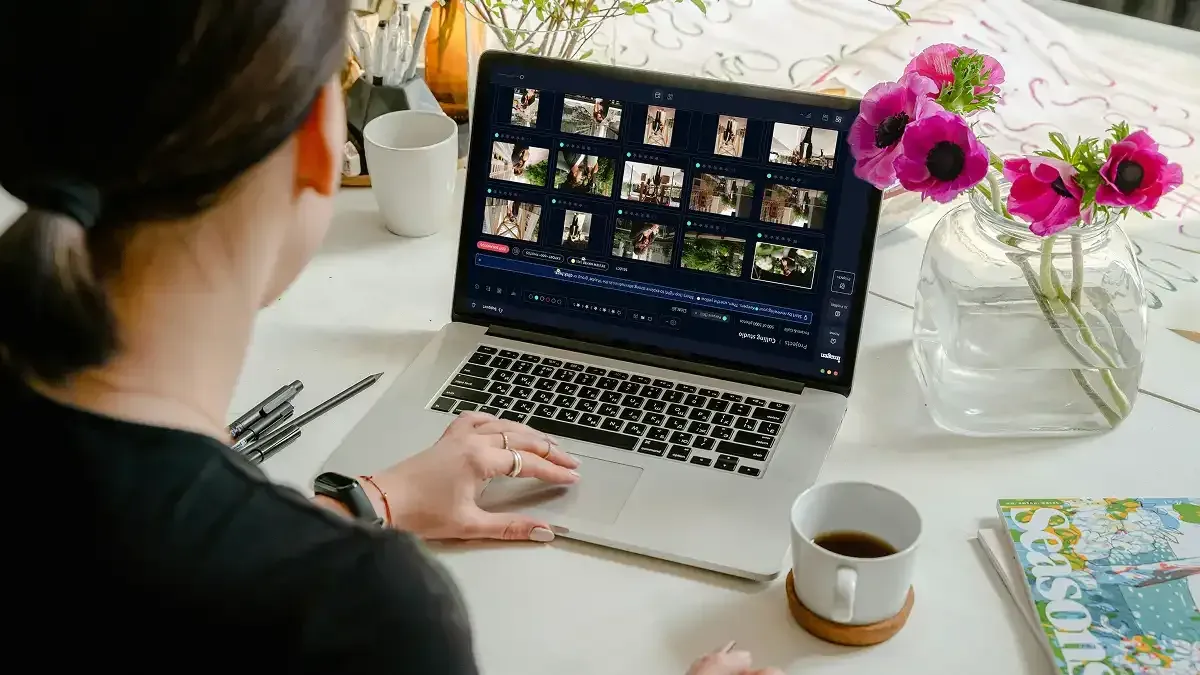
Culling software is not an editor. Its job is selection, and the better tools handle four tasks that map directly onto how street photographers shoot.
First, it groups near-duplicates. Instead of a flat wall of thumbnails, you see the burst as a cluster, so the twelve frames of that street corner sit together and you compare them as a set. Second, it evaluates technical quality inside each group, checking focus and sharpness so the obviously soft frames drop out of contention. Third, it flags common rejects such as closed eyes or motion blur that ruins an otherwise strong composition. Fourth, it ranks or preselects the strongest candidate in each cluster so you start from a shortlist rather than from raw chaos.
The key mental model is that culling software makes the boring decisions so you keep the interesting ones. Whether a frame is in focus is a boring decision, and a machine is faster at it than you are. Whether a slightly softer frame with better timing beats a razor-sharp frame with dead timing is a creative decision, and that stays with you. The best tools respect that line.
What to look for in culling software for street photography
Street work has specific demands that a generic culling feature list does not always meet. A few criteria matter more than the rest.
Speed on large takes comes first. If the software chokes on a thousand-frame import or makes you wait a long time before you can start reviewing, it has failed at the one job you hired it for. Look for tools that begin surfacing selections quickly rather than forcing a long analysis before you can touch anything.
RAW support is non-negotiable if you shoot RAW, which most serious street photographers do for the latitude it gives in mixed light. The culling pass should read your RAW files directly rather than making you convert first. Near-duplicate grouping needs to be genuinely smart, because street bursts are not always a clean continuous sequence. You might have three frames of a scene, move on, then return to it a minute later, and a good grouper understands those belong to the same idea.
Finally, look at how the tool hands off to editing. Culling is step one. The frames you keep still need color and tone work, and a workflow that keeps culling and editing in one consistent flow saves you from exporting, re-importing, and losing your selections along the way. That handoff is where an integrated tool earns its place.
How AI culling narrows a street take
AI culling is the current shape of this work, and for street photography it is a strong fit because the genre generates exactly the kind of high-volume, high-similarity take that manual review handles worst. An AI pass looks across your whole import, recognizes the bursts, assesses sharpness and framing inside each burst, and narrows the near-identical frames down before you scroll a single row. What used to be an hour of comparing lookalikes becomes a few minutes of confirming a shortlist.
This matters because it moves your attention to where it belongs. When the machine has already removed the soft frames and the mistimed ones, you are left comparing genuine contenders, and that is the comparison worth your judgment. You are deciding between two good frames of the same moment rather than fishing two good frames out of twelve. The creative call is still entirely yours. The software just stops making you earn it through tedium.
AI culling also pairs naturally with the next step, which is giving your keepers a consistent look. Street sets shot across changing light, from open shade to neon to hard midday sun, benefit enormously from a coherent grade, and doing that by hand on every frame reintroduces the very time you just saved on culling. This is where a tool that does both starts to matter.
Imagen: culling plus a consistent grade in one desktop workflow
Imagen is a desktop app for Mac and Windows built for photographers who deliver whole sets rather than single hero images, which makes it a natural fit for the volume side of street work. You download and install it, and the AI processing runs in the cloud. You add your take, and you are ready to start, using AI culling or culling manually for free.
Its AI culling narrows the near-duplicate bursts that street shooting produces, so the twelve frames of that corner collapse to the one or two worth keeping before you spend energy scrolling. Then its batch editing, driven by your Personal AI Profile, applies color correction, exposure balancing, and white balance in your own consistent style across the whole set. A frame grabbed in cold open shade and a frame grabbed under warm shop light come back looking like one coherent body of work rather than a patchwork of separate edits. Because your look lives in a reusable style profile, the grade you develop for one street set becomes the starting point for the next, which is how a personal aesthetic stays consistent across a year of shooting. Imagen reports that the first batch finishes in under 10 minutes, and it reads your RAW files directly. For the occasional frame that needs individual attention, the AI Assistant handles per-photo finishing such as object removal and background blur. In the new Studio you cull, edit and export in one project. You can see how the flow works on the Imagen site.
Pricing is pay-as-you-go, so you pay for the photos you export. That lets you run a real street take through it before committing. Sliders, crops, and masks you do yourself are always free. Two honest limits are worth stating plainly. Imagen does not sharpen or deblur a soft or missed-focus capture, and it does not do compositing or true multi-frame HDR bracket merging. It culls the take, then grades and finishes what your camera actually recorded. Within that lane, for narrowing volume and holding a consistent look, it is a strong match for how street photographers work.
Where culling software stops, and what handles the rest
It is worth being clear about the jobs culling software does not do, because street photographers sometimes reach for the wrong tool. Culling and batch grading are about selection and consistent color across a set. They are not about rescuing a single damaged frame or building a composite.
If a frame missed focus or shows heavy motion blur, that is a job for a dedicated detail-enhancement tool built to sharpen and denoise, and even those work within limits and cannot invent focus that was never captured. If you want to merge a bracketed sequence into a single high-dynamic-range file, that belongs to dedicated HDR bracket-merging software. If a frame needs deep manual retouching, precise masking, or element-by-element compositing, a layer-based editor remains the standard for that hands-on work. None of these overlap with culling. They live downstream of it, on the rare individual frame that earns extra attention after the take has been narrowed and graded.
The practical takeaway is that these are neutral, separate categories, each strong at its own job. You cull and grade the whole set first, then hand the one exceptional frame that needs it to the specialist tool for that specific problem. Trying to make a culling tool sharpen a soft frame, or asking a sharpening tool to organize your take, wastes time in both directions.
Building a street photography culling workflow
A workable routine for high-volume street work has three stages, and matching the right tool to each stage is the whole game. Start by importing the full take and running an AI culling pass to narrow the bursts, so a thousand frames become a shortlist of real contenders in minutes. Make your final creative selections from that shortlist, comparing only the frames that genuinely compete. Then apply a consistent grade across your keepers so the set reads as one coherent piece of work, and lean on a reusable style profile so you are not rebuilding your look every time.
Only after that do you consider the specialist steps, and only for the frames that need them. Most street sets never need a sharpening pass or a composite at all. The point is not to crown one tool that does everything. The point is to stop spending your best hours on triage, get to your keepers fast, and give them a look that is unmistakably yours.
If your volume work also spills into weddings or events, three companion guides go deeper on the parts that eat the most hours. See batch photo editing software for wedding photographers, photo culling software for wedding photographers, and color grading software for wedding photography. You can also browse the full library of photography workflow tips for more on culling, batch editing, and building a consistent look.
What’s new in Imagen: Culling now sits inside one project in Imagen, an intelligent, agentic Studio for professional photographers where you cull, edit, review and export in any order. Choose AI culling and AI filters such as blur and closed eyes to narrow a street take, or skip the AI and cull manually for free. Access is rolling out gradually while the Studio is in beta.
Frequently Asked Questions
What is the best type of photo culling software for street photographers?
Street photography generates high-volume takes full of near-identical burst frames, so the strongest fit is AI culling software that groups near-duplicates, checks focus, and narrows each burst to its best candidate. A tool that also applies a consistent batch grade to your keepers saves a second round of manual work, since street sets are usually shot across changing light that needs to be unified afterward.
Can culling software fix a blurry or out-of-focus street frame?
No. Culling software selects and organizes frames, it does not repair them. A soft or missed-focus capture needs a dedicated detail-enhancement tool built to sharpen and denoise, and even that works within limits and cannot fully restore focus that was never captured. Imagen, for example, culls and grades but does not sharpen or deblur, so a damaged frame belongs to a separate specialist step.
How much does Imagen cost, and is there a free trial?
Imagen is pay-as-you-go: you pay for the photos you export and see every edit in the gallery first, so you can run a real street take through both the culling and the batch grade before committing. Imagen also offers a free trial.
Does culling software work with RAW files?
Good culling software reads RAW files directly, which matters for street photographers who shoot RAW for the latitude it gives in mixed and difficult light. Imagen is a desktop app for Mac and Windows that reads your RAW files, with the AI processing running in the cloud, so there is no conversion step before you can start narrowing the take.
Should I use one tool for culling or several tools for my whole workflow?
Most street workflows use a fast AI tool for the two jobs that scale with volume, culling the take and applying a consistent grade, then reach for a specialist tool only on the rare frame that needs sharpening, HDR bracket merging, or manual compositing. Those specialist jobs are separate categories that live downstream of culling, so match each step to the tool built for it rather than forcing one app to do everything.

