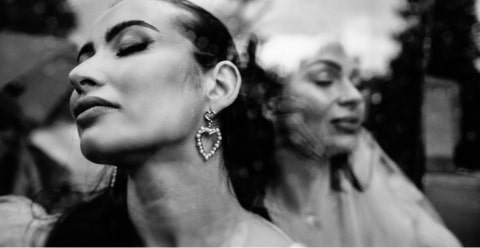
As a professional photographer, I get asked one question all the time. “How do you get that soft, dreamy look in your photos?” It’s that popular style you see everywhere, especially in wedding and portrait photography. It feels timeless, romantic, and light.
Many folks turn to “dreamy Lightroom presets” hoping for a one-click fix. I’ve been there. The truth is, presets often create more problems than they solve. Getting a truly professional, consistent look is tough. It requires more than just a simple filter.
Let’s walk through what this style is, the hard way to do it, and a much, much smarter way to get it right every single time.
Key Takeaways
- The “dreamy” look is defined by soft light, lifted blacks (low contrast), and a muted, warm color palette.
- Manually creating this look is complex. It involves careful adjustments to the Tone Curve, HSL panel, and Color Grading tools in Lightroom.
- Traditional Lightroom presets are a “one-size-fits-all” solution. They apply static settings that fail to adapt to different lighting, white balance, or exposure. This leads to inconsistency.
- AI photo editing with Imagen is a modern solution. It analyzes each photo individually and applies intelligent edits to achieve a consistent result, no matter the lighting.
- Imagen uses Personal AI Profiles (which learn your unique style from 3,000+ of your photos) or Talent AI Profiles (which use a pro’s style) to edit.
- You can even create a Lite Personal AI Profile from a single preset. This gives you the style of the preset but with the intelligence of AI.
- Imagen is a full workflow platform. It offers AI Culling, Cloud Storage, and direct delivery, going far beyond what a simple preset can do.
What Defines the “Dreamy” Photo Aesthetic?
Before we can create the “dreamy” look, we need to agree on what it is. It’s not just one thing. It’s a combination of several key visual elements. When they all work together, you get that soft, romantic, and timeless feel.
Core Tones: Softness and Light
This is the most important part. The “dreamy” look is all about light. It feels airy and soft, not harsh or punchy.
- Low Contrast: The image doesn’t have deep, dark blacks or bright, sharp whites. Instead, the range between the darkest and brightest parts is compressed.
- Lifted Blacks: This is the signature of the style. The darkest parts of the photo are not pure black. They are “lifted” to a soft gray. This is often called a “faded” or “matte” look. It removes harshness and adds a gentle, film-like quality.
- Muted Highlights: The brightest parts of the photo are also not pure white. They are “rolled off” or muted. This stops the sky from being a bright, distracting white. It helps keep the soft, gentle feel.
The Color Palette of Dreams
Color is the next key ingredient. The dreamy look uses a very specific, stylized color palette.
- Muted, Earthy Tones: Colors are not bright and poppy. They are often desaturated.
- Warm Skin Tones: Skin tones are central. They are almost always pushed to be warm, peachy, or golden. This adds to the romantic, healthy glow.
- Desaturated Greens: This is a big one. Bright, distracting greens in foliage are almost always desaturated. They are often shifted toward a more earthy, olive, or even brownish-green. This makes the subjects (people) stand out.
- Pastel Hues: You will often see colors shifted. Blues in the sky might be pushed toward a softer aqua or teal.
Texture and Focus
Finally, the dreamy look often has a texture that makes it feel less “digital.”
- Filmic Grain: A fine layer of grain is often added. This breaks up the clean, digital look. It adds texture and a feeling of nostalgia.
- Softness: While the subject is in focus, the overall image might have a gentle softness. It’s not “tack sharp” in a clinical way. This can come from using a wide aperture (like f/1.8) to create a shallow depth of field, which results in a blurry background (bokeh).
Section Summary
In short, the “dreamy” look is soft, warm, and gentle. It has low contrast, lifted blacks, and a muted, earthy color palette. It feels less like a sharp digital photo and more like a timeless, romantic memory.
The Hard Way: Manually Editing for the Dreamy Look in Lightroom
So, how do we create this look from scratch in Adobe Lightroom? As a pro, this is how I learned to do it. It’s important to understand this process. It shows you why presets are so limited.
This is a long process. It requires tweaking many different panels for every single photo.
H3: Step 1: The Basic Panel
This is your foundation. You must get this right first.
- White Balance (WB): The dreamy look is warm. I almost always push the Temp slider to the right (yellow). Just a little bit. I also often add a tiny bit of Tint toward the magenta.
- Exposure: Get your exposure right. Make sure the subject is well-lit.
- Contrast: I pull the Contrast slider down. This starts the process of softening the image.
- Highlights: Pull the Highlights slider way down. This brings back detail in bright skies or a white wedding dress.
- Shadows: Push the Shadows slider way up. This lifts the shadows and adds that “airy” feel.
- Whites: Hold the Alt (or Option) key and click the Whites slider. Drag it left until you see almost no white spots. This mutes the highlights.
- Blacks: Hold the Alt (or Option) key and click the Blacks slider. Drag it right. You want to “lift” the blacks so nothing is pure black.
- Presence: I often lower the Clarity slider just a little to add softness. I might also lower Dehaze. I usually boost Vibrance (which protects skin tones) and lower Saturation (which affects all colors).
H3: Step 2: The Tone Curve (The “Secret Sauce”)
This is where the real magic happens for the dreamy look. If you don’t understand the Tone Curve, you can’t create this style.
- Go to the Tone Curve panel.
- Make sure you are on the “Point Curve” (the little circle icon).
- Lift the Blacks: Click the bottom-left point on the line. Drag it up the left axis. You will instantly see the darkest parts of your photo turn into a soft gray. This is the “matte” or “faded” look.
- Drop the Whites: Click the top-right point. Drag it down the right axis. This mutes your highlights.
- Add a Gentle “S-Curve”: Now, click in the middle of the line (in the midtones) and pull it up slightly. Click in the lower-middle (the shadows) and pull it down slightly. This adds back just a little bit of contrast so the photo doesn’t look flat or “muddy.”
This step alone is the most important part of the style.
H3: Step 3: Color Grading with the HSL/Color Panel
This is how you get the “dreamy” color palette. HSL stands for Hue, Saturation, and Luminance.
- Hue: Go to the Hue tab. I slightly shift my Greens toward Yellow or Aqua. I might shift my Blues toward Aqua.
- Saturation: This is the big one. Go to the Saturation tab. I pull the Green slider way down. I also pull the Blue slider down. I might boost the Orange and Red sliders just a bit to make skin tones pop.
- Luminance: Go to the Luminance tab. Luminance means brightness. I almost always boost the Orange slider. This makes skin tones brighter and gives them that “glow.” I might darken the Blue slider to add drama to a sky.
H3: Step 4: Split Toning (Color Grading Panel)
Lightroom’s new Color Grading panel (which used to be Split Toning) is another pro tool. It lets you add different colors to your shadows, midtones, and highlights.
- Shadows: I often add a low-saturation Yellow or Orange to the shadows. This adds to the overall warmth and film look.
- Highlights: I might add a very subtle Teal or Blue to the highlights. This creates a nice color contrast with the warm skin tones.
H5: Step 5: Finishing Touches (Effects & Calibration)
We’re almost there.
- Effects: Go to the Effects panel. This is where I add Grain. I’ll add a small amount, like 10 or 15.
- Camera Calibration: This is a hidden but powerful panel. The Red Primary and Blue Primary sliders can create very unique color shifts that are hard to get elsewhere. Messing with these is a common part of many pro preset looks.
The Challenge: Why Manual Editing is Unsustainable
Phew. That’s a lot of steps, right?
Now, imagine doing that for a 600-photo wedding. It’s a nightmare. But the real problem isn’t the time. It’s inconsistency.
All those settings I just listed? They only work for one photo.
What happens when the next photo is in bright, direct sunlight? Or in a dark, shady forest? Or indoors with ugly yellow lights?
My manual settings are now useless. I have to redo all of those steps. I have to change the White Balance. I have to re-adjust the exposure. I have to change my HSL sliders. My “dreamy” look is now totally different from one photo to the next.
This is the core problem that all professional photographers face.
Section Summary
Manually creating the “dreamy” look is complex. It requires a deep understanding of Lightroom’s most advanced tools. Even if you know the steps, applying them consistently across hundreds of photos with different lighting is almost impossible.
The “Easy” Button? The Problem with Traditional Dreamy Lightroom Presets
This is where everyone turns for a solution. “I’ll just buy a dreamy Lightroom preset pack!”
I get it. I’ve bought them, too. You see a beautiful before-and-after on Instagram and you think, “That’s the look I want.”
But presets have a massive, fatal flaw.
What is a Lightroom Preset?
A preset is just a saved list of slider positions. That’s it.
When you click a preset, it’s the same as if you manually moved all those sliders in the Basic, Tone Curve, and HSL panels to a specific, saved position.
The Core Limitation: One Size Fits None
Do you see the problem? A preset is a static, dumb tool.
It applies the exact same settings to every single photo. It does not matter what the photo looks like.
- You apply your “Dreamy Sunset” preset to a photo taken in the shade. The photo is now dark, muddy, and looks terrible.
- You apply your “Indoor Airy” preset to a photo taken in bright sun. The photo is now completely white and blown out.
A preset cannot read your photo. It doesn’t know what your exposure is. It doesn’t know if your white balance is correct. It just slaps the same settings on top and hopes for the best.
The Endless “Tweak” Cycle
This is the life of a preset user.
- Click the preset.
- Say, “Ugh, that’s not right.”
- Spend the next five minutes fixing the preset. You change the exposure. You fix the white balance. You re-tweak the shadows.
- You move to the next photo. The same preset looks totally different.
- You repeat the “tweak” cycle.
You are not saving time. You are just starting from a different (and often wrong) starting point. Your final photos are still inconsistent because you are tweaking every single one by hand.
Section Summary
Dreamy Lightroom presets are not a magic fix. They are a “one-size-fits-all” tool in a profession that requires a custom fit. They fail to adapt to the single most important thing in photography: light. This leads to frustration and, most importantly, inconsistent results.
A Modern Solution: AI Editing with Imagen
For years, this was just the reality of the job. You either spent 20 hours editing a wedding by hand, or you used presets and got fast but “meh” results.
Then, AI editing changed my entire workflow. For my work, I use Imagen.

Imagen is the solution to the preset problem. It’s not a preset. It’s an intelligent editing assistant.
What is Imagen and How is it Different?
Imagen is a desktop app. It works directly with your Adobe Lightroom Classic catalogs. It also works with Lightroom, Photoshop, and Bridge by using folders.
Here is the most important part: Imagen does not apply static settings.
When you send your photos to Imagen, its AI (which runs in the cloud) analyzes every single photo individually.
It looks at the photo’s histogram. It understands its exposure, its white balance, and its lighting. Then, it applies custom edits to that specific photo to make it match your target style.
- A dark, underexposed photo? Imagen will intelligently raise the exposure and white balance before applying the “dreamy” style.
- A bright, overexposed photo? Imagen will lower the highlights and exposure before applying the style.
The result is what we’ve always wanted: true consistency. The style is the same across all photos, but the edits are unique and custom to each photo.
The Power of AI Profiles: The “Dreamy” Look That Learns
So, how do you tell Imagen what “dreamy” look you want? You use an AI Profile. You have three amazing options.
H4: Talent AI Profiles: The Pro-Level “Dreamy” Look, Instantly
This is the perfect place to start. Imagen partners with world-famous photographers. These pros have “trained” an AI on thousands of their final, edited photos.
You can go into Imagen‘s “Profile Showcase” and find a Talent AI Profile that matches your vision. You’ll find styles like “Light & Airy” or “Earthy & Warm” which are perfect for that dreamy feel.
This is like hiring that famous photographer to be your personal editor. The AI edits your photos in their signature style, but it still adapts to your photo’s lighting. This is what presets wish they could be.
H4: Personal AI Profile: Building Your Own Dreamy Style
This is the ultimate professional tool. This is what I use.
Imagen lets you create your own Personal AI Profile.
Here is how it works: You give Imagen at least 3,000 of your own photos that you have already edited in your dreamy style. You just point it at your old Lightroom Classic catalogs.
Imagen studies all of them. It learns your unique tastes. It learns how you treat highlights. It learns your specific color palette. It learns your tone curve.
It then builds a private AI model that is you.
From that day on, you can shoot a new wedding, upload the unedited photos to Imagen, and Imagen edits them exactly like you would. It’s your style, your brand, but with zero editing time. This is the solution to the consistency problem.
H4: Lite Personal AI Profile: The Bridge Between Presets and AI
What if you are new and don’t have 3,000 edited photos? What if you really love a specific dreamy preset you bought?
Imagen has a solution for this. It’s called a Lite Personal AI Profile.
You can create a profile based on a single preset file (an .xmp file).
Imagen takes the style of that preset, but combines it with its powerful AI. When you edit, Imagen will first fix the exposure and white balance for each photo, and then intelligently apply the look of your preset.
This is the best of both worlds. It’s the style you bought, but it actually works across different lighting conditions.
Section Summary
Imagen is not a preset. It’s an AI editor. It delivers the “dreamy” look by applying dynamic, intelligent edits to each photo. It uses Talent AI Profiles to get you a pro look instantly, or a Personal AI Profile to learn your own unique style.
A Practical Walkthrough: Getting the Dreamy Look with Imagen
This all sounds great, but how does it actually work? It’s simple. Here is my step-by-step workflow.
H3: Step 1: Install Imagen and Sign Up
First, you download the Imagen desktop app. It’s not web-based. It lives on your computer and works with your files. (The processing is done in the cloud, which makes it super fast).
You can sign up and get 1,000 free AI edits to try it out.
H3: Step 2: Choose Your Path
When you first start, you need an AI profile.
- Option A (The Pro Move): I recommend building a Personal AI Profile. You go to the AI Profiles tab and click Create your own profile. Imagen will guide you. You’ll point it to your Lightroom Classic catalogs that have at least 3,000 of your best, consistently edited photos. This one-time setup might take up to 24 hours to train, but it’s worth it.
- Option B (The Fast Track): Just want to start? Go to the Profile Showcase. Find a Talent AI Profile you love (find a “dreamy” one) and add it to your account. You can start editing in minutes.
H3: Step 3: Create a Project and Upload
Now for the fun part. You just finished a shoot.
- In Lightroom Classic, import your RAW photos as you always do. Don’t edit them.
- Go to the Imagen app. Click Create a Project.
- Choose Edit.
- Imagen will show you your Lightroom Classic catalogs. Find the new one you just imported.
- Select the photos you want to edit (e.g., the whole wedding).
- Click Next.
H3: Step 4: Choose Your Profile and AI Tools
This is the final setup.
- Name the project.
- Choose an AI Profile: Select your Personal AI Profile (“My Dreamy Style”) or the Talent AI Profile you picked.
- Choose AI Tools: This is where Imagen blows presets away. You can also add:
- Straighten: Imagen‘s AI will automatically straighten the horizon on all your photos.
- Crop: It will intelligently crop your photos for better composition.
- Subject Mask: It will find the people in your photos and create a mask. This is huge for the dreamy look! You can tell Imagen to always add a little brightness or sharpness to your subjects, helping them pop.
H3: Step 5: Download and Review
Now you click Edit. Imagen uploads your photos (or smart previews, which is faster) to the cloud and gets to work.
It is fast. It edits at about half a second per photo. A 1,000-photo wedding can be done in 10-15 minutes.
When it’s ready, Imagen tells you. You click Download to review.
You open Lightroom Classic, and it’s like magic. All your photos are edited. The sliders are all moved. Everything is done. You can review the photos and make any tiny tweaks you want.
H3: Step 6: The “Secret Weapon”: Fine-Tune Your Profile
This is the best part. Let’s say Imagen edited a photo, but you thought, “I’d make it a little warmer.” So you go into Lightroom, move the Temp slider, and finish your tweaks.
When you’re done, you go back to Imagen and click Upload Final Edits.
Imagen re-analyzes your changes. It learns from your tweaks.
The next time you use your Personal AI Profile, it will be smarter. It will remember that you like your photos just a little bit warmer. Your profile evolves with you.
A preset can never do this.
Section Summary
The Imagen workflow is simple. You upload unedited photos from Lightroom. You choose your AI profile and tools. You download the finished edits just minutes later. By using “Fine-Tune,” your AI profile gets better and better over time.
But Wait, There’s More: How Imagen Streamlines the Entire Workflow
Here’s the final point. Imagen isn’t just a replacement for “dreamy presets.” It’s a replacement for your entire tedious workflow. This is what they mean by a comprehensive platform.
H3: It Starts with AI Culling
Before you can even edit a dreamy photo, you have to find it. Culling a wedding (choosing the best photos) can take hours.
Imagen has AI Culling built-in.
You can upload your entire memory card dump (say, 5,000 photos) to Imagen‘s Culling Studio. The AI will:
- Group all your duplicate shots together.
- Check for focus and identify all the blurry photos.
- Find all the photos with closed eyes (and it’s smart enough to know a “kiss” is a keeper!).
- Give you a final, culled gallery of just the best shots.
You can even tell it, “I need exactly 500 photos for the client,” and the AI will “Cull to Exact Number.” You can review the cull with your dreamy AI profile already applied to see how the final images will look.
H3: Secure Backup with Cloud Storage
As you are culling and editing, Imagen offers Cloud Storage. It can automatically back up your original RAW files to the cloud.
It’s optimized, so it saves space, and it’s secure. This is peace of mind. You no longer need a separate service for backing up your work-in-progress.
H3: Deliver Directly from Imagen
Once your photos are culled and edited, what’s next? Delivering to the client.
Imagen handles this, too. After you’ve approved the final edits, you can tell Imagen to:
- Export final JPEGs to a folder.
- Publish the entire gallery directly to Pic-Time (a popular gallery service for pros).
Section Summary
Imagen is not just a better preset. It’s an all-in-one platform. It takes you from 5,000 photos on a memory card to a final, culled, edited, and delivered client gallery. It brings culling, editing, storage, and delivery into one single, fast application.
Final Thoughts: Presets vs. a Personal AI Editor
The “dreamy” look is a beautiful style. But it’s defined by its feeling and its adaptation to light.
A traditional “dreamy Lightroom preset” is a static, blunt tool. It fails because it cannot adapt. It gives you a starting point that is often wrong, forcing you to re-edit every photo by hand and destroying consistency.
Imagen is a dynamic, intelligent solution. It acts like a real, professional editor. It analyzes every single photo and makes custom decisions to achieve a consistent result.
With a Talent AI Profile, you get instant access to a top pro’s style that adapts to your photos. With a Personal AI Profile, you get something truly priceless: your own style, perfected and automated.
So, you can keep buying preset packs, hoping for a magic bullet that doesn’t exist. Or you can use an AI assistant that learns you and gives you back the one thing no photographer has: time.
Frequently Asked Questions (FAQ)
1. Are “dreamy” Lightroom presets completely useless, then? Not completely. They are a good learning tool. You can apply a preset and then study the sliders to see how the look was made. They are also the starting point for Imagen‘s Lite Personal AI Profile, which turns a static preset into an intelligent tool.
2. How many photos do I really need for a Personal AI Profile? Imagen recommends a minimum of 3,000 edited photos for the best results. The more (consistent) photos you give it, the more accurate it will be. If you have 5,000 or more, that’s even better.
3. What if my editing style isn’t consistent? You should not create one Personal AI Profile with all your photos. The AI will get confused. Instead, create separate profiles. Go into Lightroom and use folders or collections. Put all your “dreamy/airy” photos in one. Put all your “dark/moody” photos in another. Then, build two different profiles.
4. Can Imagen edit JPEGs, or just RAW? Imagen can edit both RAW and JPEG formats. You just have to create a separate AI Profile for each. So, you would have a “Dreamy RAW” profile and a “Dreamy JPEG” profile.
5. Is Imagen a subscription? How does the pricing work? Imagen is a “pay-as-you-go” service. You pay a small amount for each photo you edit (e.g., a few cents). There are also subscription plans that include culling and storage for a monthly fee, which can be more cost-effective for high-volume pros. You get 1,000 free edits to start.
6. Will Imagen’s AI editing replace my creativity? No. It automates your creativity. It takes the style you already created (with your Personal AI Profile) and applies it to the tedious parts of the job. You are still the creative director. Imagen is just the fast, reliable assistant who does the work for you. It frees you up to be more creative.
7. What’s the difference between a Talent AI Profile and buying a preset pack from that same photographer? A preset pack is a static .xmp file. It applies the same settings to every photo. The Talent AI Profile is an AI model trained on thousands of that photographer’s edits. The AI Profile adapts its edits to your photo’s specific lighting and exposure. The AI Profile is far more powerful and consistent.
8. How long does Imagen take to edit a full wedding? It’s incredibly fast. Imagen edits at roughly 0.5 seconds per photo. A 1,000-photo gallery is often edited and ready to download in 10 to 15 minutes.
9. Does Imagen work with Lightroom CC (cloud) or just Lightroom Classic? Imagen‘s main integration is with Lightroom Classic because that’s what most high-volume professionals use. However, it can work with Lightroom (cloud), Photoshop, and Bridge. Instead of selecting a catalog, you just point Imagen to a folder of your photos.
10. What is “Fine-Tuning” and how often should I do it? Fine-Tuning is the process of uploading your final, tweaked edits back to Imagen so your Personal AI Profile can learn from your changes. I recommend you do this after every project you edit. This keeps your profile evolving with your style.
11. Can Imagen help me get a “dark and moody” look instead of “dreamy”? Absolutely. Imagen‘s AI is style-agnostic. It can learn any style. If you feed it 3,000 of your best “dark and moody” edits, it will create a “dark and moody” Personal AI Profile. You can also find Talent AI Profiles with that specific style.
12. What happens if I don’t like an edit Imagen makes? You are always in control. The edits Imagen makes are just slider changes in your Lightroom catalog. You can easily tweak them, just like any other photo. And if you have a Personal AI Profile, you can use the “Upload Final Edits” feature to teach Imagen what you changed, so it does it right the next time.
13. Is Imagen’s culling really better than just using Lightroom’s flags? Yes, because it’s automated. It saves you the initial pass. Instead of manually looking at 5,000 photos, Imagen‘s AI does that first pass for you. It groups all the duplicates and flags the blurry/blink shots. This means you only have to review the best photos, saving you hours.