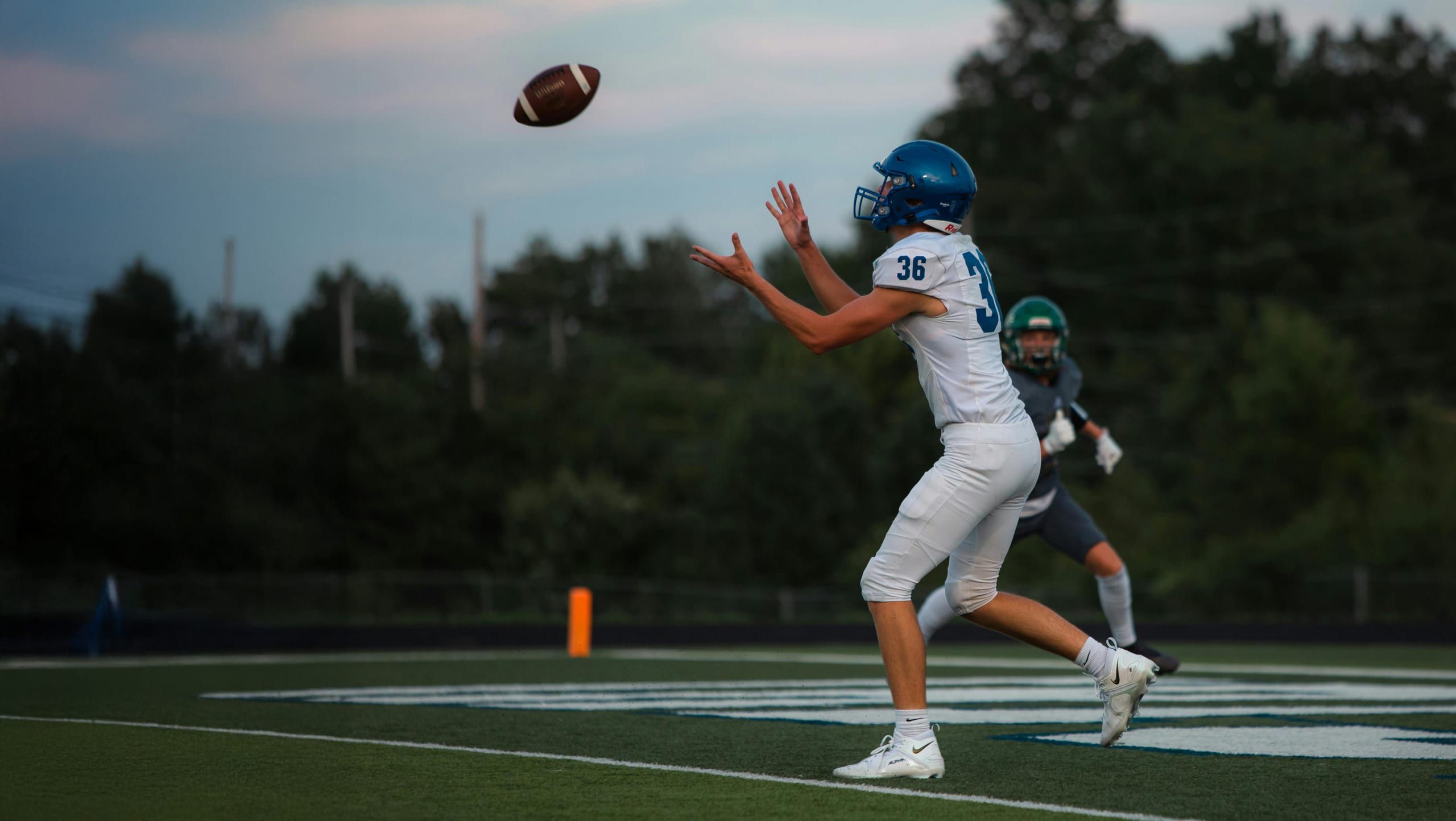
7 Common Photo Culling Mistakes for Sports Photographers to Avoid
Table of contents
- Key Takeaways
- Why Culling Is Harder in Sports Than Almost Anywhere Else
- Mistake 1: Editing Before You Cull
- Mistake 2: Reviewing Every Frame in a Burst One by One
- Mistake 3: Deleting Too Aggressively on the Back of the Camera
- Mistake 4: Culling Without Clear, Consistent Criteria
- Mistake 5: Ignoring the Tools That Automate the Mechanical Sorting
- Mistake 6: Over-Culling and Delivering Too Few Frames
- Mistake 7: Treating Every Cull as a Fresh, Unstructured Task
- A Faster Culling Routine for Sports Photographers
- Frequently Asked Questions
- Conclusion
Sports photography produces frame counts that few other genres can match. A single game can leave you with three, five, even ten thousand images, most of them shot in fast bursts where one peak moment hides among a dozen near-identical frames. Culling, the process of sorting that flood down to the keepers, is where your edit really begins, and it is also where sports shooters lose the most time and the most good pictures. Get culling wrong and you either drown in files or quietly delete the shot of the night.
This guide walks through the seven culling mistakes that slow sports photographers down and cost them keepers, then shows how to fix each one. The short version is that culling should be fast, consistent, and ruthless, and it should happen before you touch a single slider. Do it well and you deliver tighter galleries faster, protect the peak-action frames that clients pay for, and stop trading your post-game hours for a task that a clear routine can compress into minutes.
Key Takeaways
- Cull before you edit. Grading frames you later reject is wasted work, so the cull has to come first.
- Burst discipline is the core skill. Most sports frames arrive in near-identical runs, and picking the single peak frame is the whole game.
- Speed and consistency beat perfection. A fast, repeatable pass with clear rules delivers a better gallery than agonizing over every frame.
- Do not delete too aggressively in the moment. Tired snap judgments on a small screen throw away frames you would have kept at your desk.
- Let AI carry the mechanical sorting. Flagging blinks, soft focus, and duplicate bursts is exactly the repetitive work a tool should absorb so your eye is saved for the close calls.
Why Culling Is Harder in Sports Than Almost Anywhere Else
Before the mistakes, it helps to understand why sports culling is uniquely brutal. You shoot in long bursts to catch a peak moment you cannot predict, so a single tackle, dunk, or finish line can generate twenty frames that differ by fractions of a second. Multiply that across a whole game and you have thousands of images that all look almost the same. Sorting them is not like culling a portrait session where each pose is distinct; it is a hunt for the one frame where the ball, the body, and the expression all line up.
On top of the volume, sports shooters face deadline pressure that rivals event work. Editors and agencies often need selects within the hour, and social teams want frames before the final whistle stops echoing. That combination, enormous burst counts plus a ticking clock, is what turns small culling habits into big problems. A routine that works fine for a hundred images falls apart at five thousand. The mistakes below are the ones that show up precisely at that scale.
Mistake 1: Editing Before You Cull
The most expensive mistake is starting to edit before the cull is done. It is tempting, because you open the catalog, see a great frame, and want to grade it right away. But if you polish two hundred images and then realize the gallery only needs eighty, you have thrown away the time you spent on the other hundred and twenty. In sports, where the raw count is so high, editing first can waste hours before you have even decided what makes the cut.
The fix is a hard rule: culling and editing are separate stages, and culling always comes first. Make your full selection pass, lock the keeper set, and only then move into grading. This keeps your editing effort aimed exclusively at frames that will actually ship. It also keeps your head in the right mode. Culling is a fast, decisive sorting task, while editing is slower and more considered, and blending the two makes you worse at both.
Mistake 2: Reviewing Every Frame in a Burst One by One
When you shoot a fifteen-frame burst of a sprint to the line, you do not need to study all fifteen at full magnification. Yet many photographers do exactly that, zooming into each near-duplicate in turn and comparing them frame by frame. Across an entire game of bursts, this is where hours vanish. The differences between adjacent frames are tiny, and the deliberation is out of proportion to the payoff.
A faster method is to view a burst as a group, spot the two or three frames where the peak moment clearly lands, and reject the rest in one move. Use full-screen review and quick keyboard flags rather than pixel-peeping every shot. The skill you are building is recognizing the peak frame at a glance: the moment the bat meets the ball, the foot leaves the block, the hands wrap the catch. Train that instinct and burst culling stops being a slog and becomes a rhythm.
Mistake 3: Deleting Too Aggressively on the Back of the Camera
Chimping through images on the camera’s rear screen between plays feels efficient, and deleting the obvious misses on the spot seems like a head start. But that tiny screen is a terrible place to make final calls. Focus that looks soft at that size may be perfectly sharp on a monitor, and a frame you dismiss as a throwaway in the moment can turn out to be the emotional shot of the game once you see it large. Aggressive in-camera deletion permanently removes options you have not properly evaluated.
Keep culling off the camera and on a proper display. Shoot the game, back up your cards, and make selection decisions at your desk where you can judge sharpness, expression, and composition accurately. The only safe in-camera deletion is the truly unrecoverable frame, the lens cap shot or the accidental burst of the ground. Everything with any potential deserves a real review later. Deleting is a one-way door, so walk through it slowly.
Mistake 4: Culling Without Clear, Consistent Criteria
If your standard for a keeper drifts as you get tired, your gallery ends up uneven. Early in the cull you might demand tack-sharp eyes and perfect peak timing, then two thousand frames later you are keeping softer, looser frames just to be done. The result is a selection that swings in quality and does not represent your best work consistently. Vague, shifting criteria are a quiet killer of gallery quality.
Decide your keeper rules before you start and hold them for the whole pass. For most sports work the core tests are simple: is the critical action sharp, is the peak moment caught, and does the frame tell the story of the play. Apply the same bar from the first frame to the last. A consistent standard not only lifts quality, it speeds you up, because a clear yes-or-no rule removes the hesitation that makes culling drag. When you hesitate, that hesitation itself is usually a no.
Mistake 5: Ignoring the Tools That Automate the Mechanical Sorting
Plenty of sports photographers still cull entirely by hand, scrolling through every frame and manually flagging blinks, soft focus, and duplicate bursts. That mechanical sorting is real work, and at sports volume it is exhausting and slow. Refusing to let software help with the repetitive detection is a mistake, because the parts of culling that a machine does well are precisely the parts that wear you out and slow your delivery.
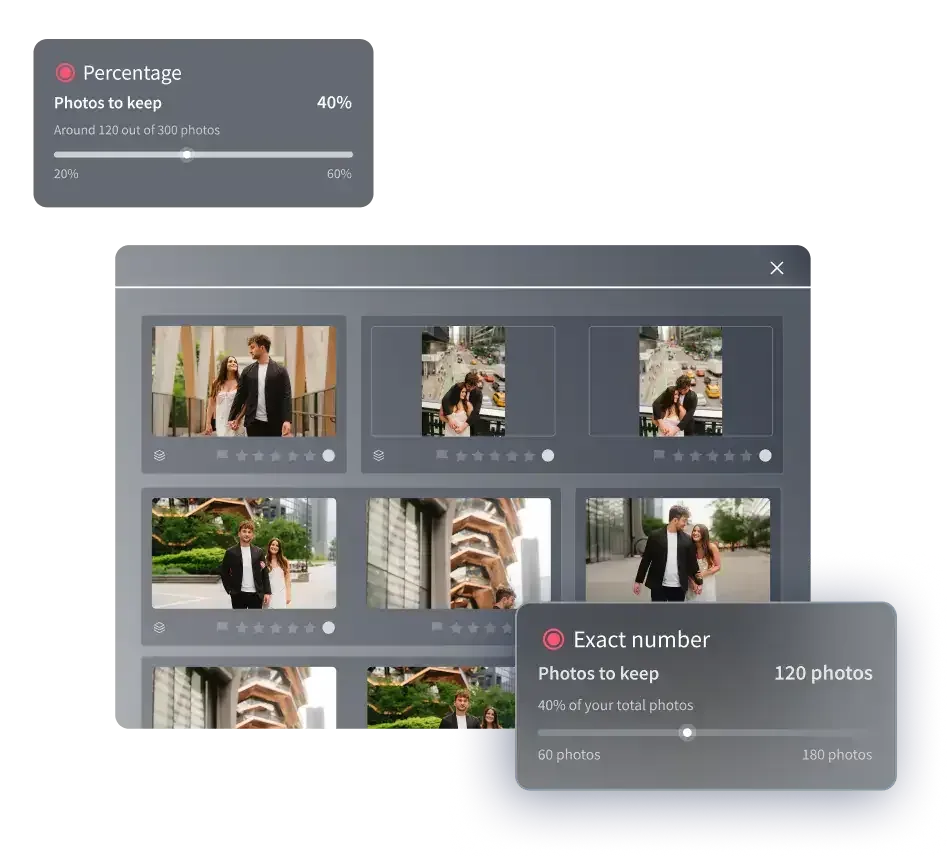
This is where Imagen’s AI sports image culling software fits a high-volume workflow. Imagen is a desktop app for Mac and Windows, with cloud AI processing, that learns your style through a personal AI profile, and its culling can flag closed eyes, out-of-focus frames, and near-duplicate bursts so you review a shortlist instead of the raw flood. The same platform also batch-edits your keepers to a consistent color and tone once the cull is done, and edited photos arrive in batches so you can start reviewing early frames while the rest finish. The tool handles the tedious detection pass so your judgment is spent only on the close calls a machine cannot make, like which of two sharp peak frames carries more emotion.
The point is not to hand your creative decisions to software. It is to stop spending your limited time on the mechanical sort. You still pick the final keepers and set the look, but you do it from a pre-filtered set rather than a chaotic dump of ten thousand frames. That division of labor is what makes same-hour delivery realistic even after a huge game.
Mistake 6: Over-Culling and Delivering Too Few Frames
There is a mirror image to keeping too much, and that is cutting too deep. Some photographers get so ruthless that they deliver a thin gallery missing key plays, secondary storylines, or the reaction shots that give a game its texture. A client covering a match usually wants more than five hero frames; they want the arc of the event, the tension, the celebration, the quieter moments on the bench. Over-culling leaves gaps that the client notices even if they cannot name them.
Balance the cull against the brief. Know what the gallery is for before you start slashing. A wire deadline might need only a handful of the sharpest, most dramatic selects, while a team or event client wants broader coverage across the whole game. Cull to the story the client needs, not to an arbitrary number. The goal is the tightest set that still tells the full tale, which is a different target from simply the smallest set possible.
Mistake 7: Treating Every Cull as a Fresh, Unstructured Task
The final mistake is approaching each game’s cull with no system, improvising the folder structure, the flagging scheme, and the review order every single time. Without a repeatable routine, you waste minutes reorienting yourself on every job and you make inconsistent decisions from one shoot to the next. Sports shooters who cover fixtures week after week feel this drag most, because the disorganization compounds across a busy season.
Build a standard culling routine and run it every time. Ingest cards to the same structure, back up immediately, do one fast rejection pass to drop the obvious misses, then a second pass to pick the keepers from the survivors, and finally hand the mechanical detection to your culling tool. When the process is fixed, your speed comes from the system rather than from willpower, and your quality stays even across every game you shoot. A named, repeatable loop is the difference between a scramble and a smooth pipeline.
A Faster Culling Routine for Sports Photographers
Put the fixes together and the workflow is straightforward. Back up your cards before anything else. Make a quick first pass to reject the unrecoverable frames without deliberating. Group your bursts and pick the peak frame or two from each run rather than studying every duplicate. Hold a consistent keeper standard from start to finish, and cull to the story the client actually needs rather than to a random count. Let an AI culling tool absorb the mechanical detection of blinks, blur, and near-duplicates so your attention lands only on the close calls.
Once the keepers are locked, the same batch approach carries into editing. A tool that learns your style can grade the whole set to a consistent look in minutes, and pay-as-you-go pricing, a monthly base fee plus a charge for the photos you export, means the cost scales with what you deliver. If you want to test how much time the culling and batch grading steps give back, run a real game through Imagen’s new Studio, where you cull, edit and export in one project, starting from the Imagen homepage, and compare it against your current post-game routine. Most sports shooters find the biggest gain is simply getting their evenings back.
What’s new in Imagen: Imagen is now an intelligent, agentic Studio for professional photographers, one project where you cull, edit, review and export in any order. For sports shooters, the built-in editor (Beta) covers crops, straightening and manual sliders, while the assistant finds photos and acts on them when you ask in plain language, with you steering. The Studio is rolling out gradually, and Imagen has the details.
Frequently Asked Questions
How long should culling a full game take?
It depends on your frame count and deadline, but a disciplined routine keeps it short even with thousands of images. A fast rejection pass, burst-group selection, and an AI detection pass that pre-filters blinks and duplicates can bring a large game down to a focused review of a shortlist. The slowest culls are almost always the ones done frame by frame with no system, so the fix for speed is structure rather than rushing.
Should I delete rejected frames or just flag them?
Flag rather than delete during the cull. Marking rejects lets you filter them out of view while keeping them recoverable in case a client asks for a specific play you did not select. Permanent deletion is a one-way door, and on a small screen or in a tired late-night pass it is easy to discard a frame you would have kept at your desk. Keep the option open until you are certain.
Can AI really pick my sports keepers for me?
AI is best at the mechanical part of culling, flagging closed eyes, soft focus, and near-duplicate bursts so you review a filtered set instead of the raw flood. It shortens the sort dramatically, but the final creative choice, which of two sharp peak frames best tells the story, still belongs to you. Think of it as a tool that clears the noise so your eye is spent only where a human judgment actually matters.
Is it better to keep too many frames or too few?
Neither extreme serves the client. Keeping too many buries the strong frames in duplicates and slows your editing, while cutting too deep drops key plays and reaction shots the client wanted. The target is the tightest gallery that still tells the full story of the game, which means culling against the brief rather than to an arbitrary number. Know what the gallery is for before you decide how hard to cut.
Conclusion
Culling is the hidden engine of sports photography. It sits between the shoot and the edit, and the habits you bring to it decide how fast you deliver and how strong your galleries look. Avoid the seven mistakes here, editing before culling, laboring over every burst frame, deleting too aggressively in-camera, culling without consistent criteria, ignoring the tools that automate the sort, over-culling to a thin gallery, and treating every job as a fresh improvisation, and the whole process gets faster and more reliable. Build a repeatable routine, let an AI culling tool carry the mechanical detection, and spend your judgment on the peak-action frames that clients remember. That is how you keep pace with the deadline without letting the shot of the game slip through the cracks.