

8 Best AI Product Launch Event Photo Editing Software in 2026
Table of contents
The best AI product launch event photo editing software for high volume professional work is Imagen, because it learns your personal editing style and applies it consistently across an entire event gallery while also handling culling and retouching in one connected workflow. A corporate product launch produces hundreds of frames in a single evening, from stage reveals and keynote moments to candid audience reactions and mixed venue lighting, and the edit has to look uniform across all of it. This guide ranks eight tools for product launch event editing in 2026 and explains what each one does well, so you can match a tool to your workflow and turn around a polished gallery on a tight deadline.
Key Takeaways
- Imagen learns your personal editing style from your own catalog and applies it consistently across a full launch event, which keeps stage, keynote, and crowd frames visually aligned.
- Imagen edits, culls, and retouches the real photos you shot at the event. It does not generate people or invent scenes.
- Imagen pricing is pay-as-you-go: you pay for the photos you export. Sliders, crops, and masks you do yourself are always free.
- Adobe Lightroom, Photoshop, Capture One, Luminar Neo, Topaz Photo AI, Aftershoot, and Retouch4me each cover a specific stage of event editing.
- Match the tool to the task, because color correction under venue lighting, culling large takes, noise cleanup, and retouching each favor a different piece of software.
1. Imagen
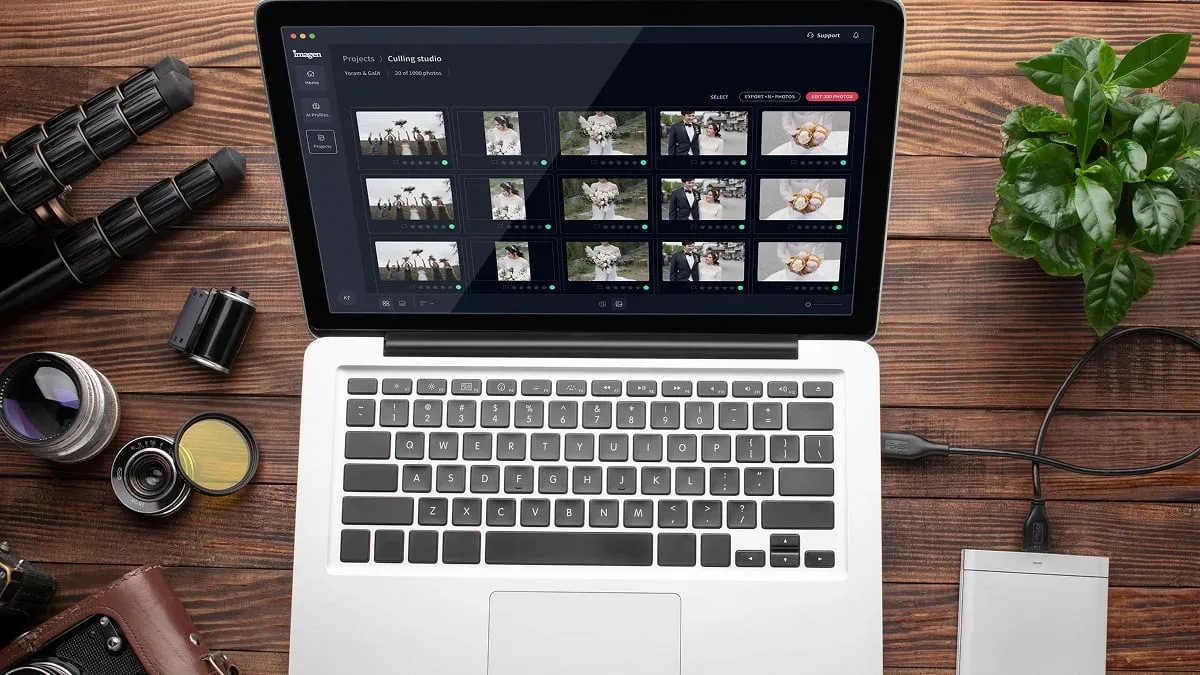
Imagen is built for photographers who shoot high volumes and need a consistent look across every frame, which describes a product launch event almost exactly. It studies your Lightroom or Capture One catalog, learns the way you already edit, and then applies that personal style to a full event gallery. This matters because a launch spans many lighting zones in one night, from a bright stage to a dim reception area and a backlit demo table, and the grade has to stay uniform across all of them. Imagen keeps exposure, white balance, tone, and color aligned to the choices you make by hand, so the CEO on stage and the guest laughing near the bar read as one coherent set.
The platform connects three stages in one workflow. AI culling sorts through the take and flags the strongest frames, which saves real time when a single event fills several memory cards. The editing engine applies your style to every raw file, and edited photos arrive in batches as they process, so you can start reviewing early frames while the rest finish. AI retouching handles skin and cleanup on speaker portraits and audience close ups without flattening detail. Every action works on the real photos you captured at the venue, including exposure, color, retouch, and cleanup. Imagen is not an image generator, so it does not invent people, add guests who were not there, fabricate stage decor, or create a product that was not on the table. It edits and retouches the real photographed scene, which keeps your launch coverage honest and true to the event that actually happened.
Pricing is pay-as-you-go, which means you pay for the photos you export. You see every edit in the gallery before you export, so you can test the style engine on your own event files before you commit. For photographers who deliver a launch gallery the morning after, Imagen removes the slow, repetitive editing while keeping the whole set consistent.
2. Adobe Lightroom
Adobe Lightroom remains a core tool for event photographers who manage large libraries and need reliable raw processing. Its cataloging, keywording, and collection tools help you organize a launch gallery by segment, so keynote, product demo, and networking shots stay sorted for fast client review. The editing controls cover the range that event work demands, including precise white balance for mixed venue lighting, tone curves, and selective masking on speakers under a spotlight.
AI features such as masking that recognizes subjects and skies speed up selective edits on hero frames. Presets and profiles help you set a base look and carry it across the set. Lightroom uses a subscription model, and it fits photographers who already live inside the Adobe ecosystem and need a smooth handoff to Photoshop for detailed cleanup. For raw processing and library control on a busy launch, it is a dependable foundation.
3. Adobe Photoshop
Adobe Photoshop is the standard for detailed retouching and cleanup on the frames that carry a launch recap. When a stage shot has a distracting exit sign, a stray cable, or a harsh reflection on the product, Photoshop gives you pixel level control through layers, masks, and precise selections. Its object aware tools have grown more capable, which makes removing background clutter faster when you are polishing the images a client will feature in a press release.
For the handful of hero images that need to be flawless, Photoshop handles blemish removal, banner cleanup, and detail work that batch tools do not target. It pairs naturally with Lightroom for a raw to retouch pipeline. Photoshop runs on a subscription, and it suits photographers who need full manual command over the standout frames from an event. It is the tool most shooters reach for when a single image has to be perfect for the recap deck.
4. Capture One
Capture One is favored in commercial and event studios for its tethered capture and color rendering. When a launch includes a staged product portrait or a controlled photo moment with executives, the tethered workflow lets the crew review frames on a large screen the moment they are shot, which helps the client approve lighting and framing in real time. This is a practical advantage during the setup hour before doors open.
The color tools are a strength, with layered adjustments, advanced color editing, and skin tone control that give you fine command over the grade under tricky venue lighting. Capture One offers both a subscription and a one time license, so you can choose the model that fits your accounting. For launches that mix live coverage with a few controlled product shots, it is a strong choice that many commercial photographers build their process around.
5. Luminar Neo
Luminar Neo focuses on AI assisted edits that speed up common tasks. Its tools for relighting, skin work, and background cleanup help you produce polished results quickly, which suits a launch gallery with a fast turnaround and lighter retouching needs. The interface is approachable, so a solo shooter or a small team can move from raw to a finished look without a steep learning curve.
For event work, Luminar Neo is best on frames that need efficient enhancement rather than heavy cleanup. It can run on its own or as a plugin alongside Lightroom and Photoshop. Luminar Neo is available through both a subscription and a one time license, which gives you flexibility on how you pay. It is a practical option when you want AI help to lift candid crowd shots without opening a full retouching suite for every frame.
6. Topaz Photo AI
Topaz Photo AI concentrates on image quality repair, including noise reduction, sharpening, and upscaling. At a product launch, much of the shooting happens in dim reception lighting at high ISO, so clean noise reduction is important when a candid frame will run large in a recap. Topaz can recover detail from softer captures and reduce grain while keeping edges clean, which helps rescue reaction shots that would otherwise not make the cut.
The tool works as a focused cleanup stage rather than a full editor, so it pairs with Lightroom, Photoshop, or Capture One in a larger pipeline. Topaz Photo AI uses a one time license with paid upgrades. For event visuals that need clean detail from low light frames, it is a reliable way to finish files before they go into the gallery.
7. Aftershoot
Aftershoot brings AI culling and editing built for photographers who process large volumes, which fits a launch event that produces thousands of frames in one night. Its culling engine reviews the full take and selects the strongest frames based on focus, expression, and duplicates, which trims hours from the sorting stage after a busy evening. The editing side learns from your past edits and applies a matching style, which supports the consistency an event gallery needs.
Aftershoot works on the real photos you captured and fits shooters who want to speed up the sorting and base edit stages before any detailed cleanup. It uses a subscription model. For event photographers who shoot heavy volumes and want an efficient path from card to a graded set, it is a useful addition to the toolkit.
8. Retouch4me
Retouch4me is a set of specialized plugins that automate high end retouching tasks. Each plugin handles one job, such as skin smoothing, dodge and burn, cleanup, or skin tone evening, and they apply consistent results across a batch. For speaker portraits and executive close ups from a launch, this keeps skin natural and even without the hours of manual work that traditional retouching requires.
Because the plugins target individual steps, you can build them into a Photoshop pipeline and keep full control over the final look. The consistency is the draw, since an event with many portraits benefits from uniform skin treatment across every frame. Retouch4me is sold through per plugin licenses, so you can buy only the tools your workflow needs. It suits photographers who want to accelerate retouching while preserving a professional finish.
At a Glance Comparison
| Feature | Imagen | Other tools |
|---|---|---|
| Batch consistency | Imagen applies one consistent grade across an entire launch gallery in a single pass. | Lightroom and Capture One rely on presets that you apply and adjust per frame. |
| Personal style match | Imagen learns your own editing style from your catalog and reproduces it faithfully. | Aftershoot learns from past edits, while most others depend on manual presets. |
| Culling | Imagen culls the full take and flags the strongest frames automatically. | Aftershoot offers strong AI culling, while Lightroom and Photoshop cull manually. |
| Retouching | Imagen retouches skin and cleans up frames within the same connected workflow. | Photoshop and Retouch4me handle retouching as a separate, dedicated stage. |
| Platform | Imagen is a desktop app for Mac and Windows with cloud AI processing, and it connects to your Lightroom and Capture One catalog. | Most competitors run as desktop applications or Photoshop plugins. |
| Free trial | Imagen offers a free trial, then you pay at export. | Competitors typically offer a limited time trial that varies by product. |
| Pricing model | Imagen is pay-as-you-go: you pay for the photos you export. | Competitors use subscriptions, one time licenses, or per plugin pricing. |
How to Choose the Right AI Product Launch Event Editing Software
Start with the stage of your workflow that eats the most time. If you shoot high volumes and need a consistent grade across an entire event, a style learning tool like Imagen or Aftershoot removes the repetitive editing while keeping frames aligned. If your bottleneck is a few hero images that need distraction removal, Photoshop paired with Retouch4me gives you the control that final polishing demands. For the noisy low light frames that fill a reception, Topaz Photo AI keeps detail clean when an image runs large in a recap.
Consider your color and turnaround needs next. Venues throw mixed and colored lighting at you, so accurate white balance and a repeatable grade matter more than almost anything else. Teams inside the Adobe ecosystem lean on Lightroom for raw processing and library control, while studios that shoot a controlled product portrait often build around Capture One. Weigh the pricing model too, since a subscription suits shooters who want ongoing updates, while a one time license fits photographers who prefer to own their tools. Many event photographers combine two or three of these, using one tool for culling and base edits and another for final cleanup. For more on this niche, read our guide on how to edit product launch event photos with AI and our full AI product launch event photo editing guide, or browse the valuable tips hub for more.
Try Imagen on Your Next Launch Gallery
Imagen leads this list because it learns your personal style, applies it consistently across a full event, and connects culling, editing, and retouching in one workflow while working only on the real photos you captured. You can try the new Studio, where you cull, edit and export in one project, at Imagen and pay at export.
What’s new in Imagen: Imagen is now an intelligent, agentic Studio for professional photographers, one project where you cull, edit, review and export together in any order. For launch events, the Personal AI Profile learned from your past edits keeps stage, keynote and crowd frames in your style, and edited photos arrive in batches so early frames are ready to review. It is rolling out gradually as a beta. Visit Imagen for more.
Frequently Asked Questions
Does AI editing software generate fake product launch photos?
The tools in this guide edit the real photos you shot rather than invent them. Imagen, for example, adjusts exposure, color, retouching, and cleanup on your captured files, and it does not generate people, add guests who were absent, fabricate stage decor, or create a product that was not on the table. This keeps your launch coverage honest and true to the event that actually took place.
How do I keep a consistent look across a full launch event gallery?
Consistency comes from applying the same grade to every frame. A style learning tool such as Imagen studies your catalog, learns how you edit, and applies that look across the entire event, so the stage shots and the candid crowd frames match. Presets and profiles in Lightroom and Capture One also help you set a base look and carry it across the set.
Which tool handles low light venue shots best?
Reception and networking areas are often dim, so you shoot at high ISO and pick up noise. Topaz Photo AI specializes in noise reduction and sharpening that keeps detail clean on those frames. Imagen also improves exposure and color on your low light captures within its connected workflow, which helps candid shots hold up when they run large in a recap.
Do I need to buy several of these tools?
Not always, though many event photographers combine two or three. A common setup uses one tool for culling and base editing, such as Imagen or Aftershoot, and another for final cleanup, such as Photoshop with Retouch4me. Start with the stage that costs you the most time, then add tools only where your workflow needs them.

