

Batch photo editing software for event photographers: A Complete 2026 Guide
Table of contents
- Why event photographers hit a wall without batch editing
- What batch photo editing software actually does
- Culling the event take before you grade
- Applying one consistent grade across the whole event
- Reusable style profiles for shoot-to-shoot consistency
- What batch software leaves to specialist tools
- How to choose batch editing software for event work
- Frequently Asked Questions
- What is batch photo editing software for event photographers?
- How does batch editing keep a large event gallery looking consistent?
- How much does Imagen cost, and is there a free trial?
- Can batch editing software fix blurry or out-of-focus event shots?
- Should event photographers use one editing tool or several?
Event photographers rarely lose sleep over a single frame. The pressure comes from the pile. One corporate conference, gala, or festival can hand you three thousand exposures shot across shifting light, and the client wants a polished gallery by the end of the week. Batch photo editing software for event photographers exists to close that gap. The right tool culls the take, applies one consistent color and tone grade across the whole set, and finishes the first pass in minutes instead of nights. This guide walks through what batch editing software does, where it fits in an event workflow, and how to pick a setup that matches the volume you actually shoot.
The short answer up front: for high-volume event work, a batch-first editor that grades an entire shoot in your own style is the tool that removes the real bottleneck. Below you will see how that layer works, what it deliberately leaves to specialist tools, and how to build a workflow around it.
Why event photographers hit a wall without batch editing
Event coverage produces volume and inconsistency at the same time, which is the hardest combination to edit by hand. A single evening might run from bright outdoor arrivals to a dim ballroom lit by mixed tungsten and stage color. Frame by frame editing means you are constantly rebalancing white balance and exposure, and by the time you reach frame nine hundred your choices have quietly drifted from where they started. The gallery ends up looking like several photographers shot it.
Batch editing software attacks both problems at once. It treats the whole take as one job, so the grade you want stays consistent from the first handshake to the last dance. That consistency is not a luxury for event work. It is what makes a gallery feel professional, and it is what frees your evenings for shooting the next booking instead of scrubbing through a backlog.
What batch photo editing software actually does
At its core, batch editing software applies a set of adjustments across many images in one pass rather than one file at a time. For event photographers the adjustments that matter most are color correction, exposure balancing, and white balance, because those are the settings that vary wildly across a long event and eat the most manual time to fix.
Modern AI-driven batch tools go a step further than a simple copy-and-paste of settings. Instead of forcing the same slider values onto every frame, they read each image and adapt the correction to that specific lighting, while still holding to your overall look. A ceremony shot in window light and a reception shot under warm bulbs both come back matching your style, not identical numbers blindly stamped on. That distinction is what separates a real batch grade from a preset applied in bulk.
Good batch software also folds in culling and per-image finishing, so the whole first pass lives in one place. You are not exporting between three apps before you have even seen a clean gallery. The next few sections break those stages down in the order an event editor actually meets them.
Culling the event take before you grade
Culling is where event editing quietly wins or loses. A busy event fills cards with near-duplicate bursts: five frames of the same toast, a dozen of the crowd on the dance floor, a run of safety shots during the keynote. Sorting those by hand is slow and numbing, and it happens before the fun part even starts.
AI culling narrows those bursts for you. It groups the near-identical frames, flags the sharp and well-composed picks, and sets aside the blinks and the misses, so you start your grade on a tighter, cleaner set. For event photographers this matters twice over. It cuts the raw count you have to process, and it means the consistent grade you apply next only runs on frames you actually intend to deliver. Culling first, then grading, is the sequence that keeps volume from swallowing your week.
Applying one consistent grade across the whole event
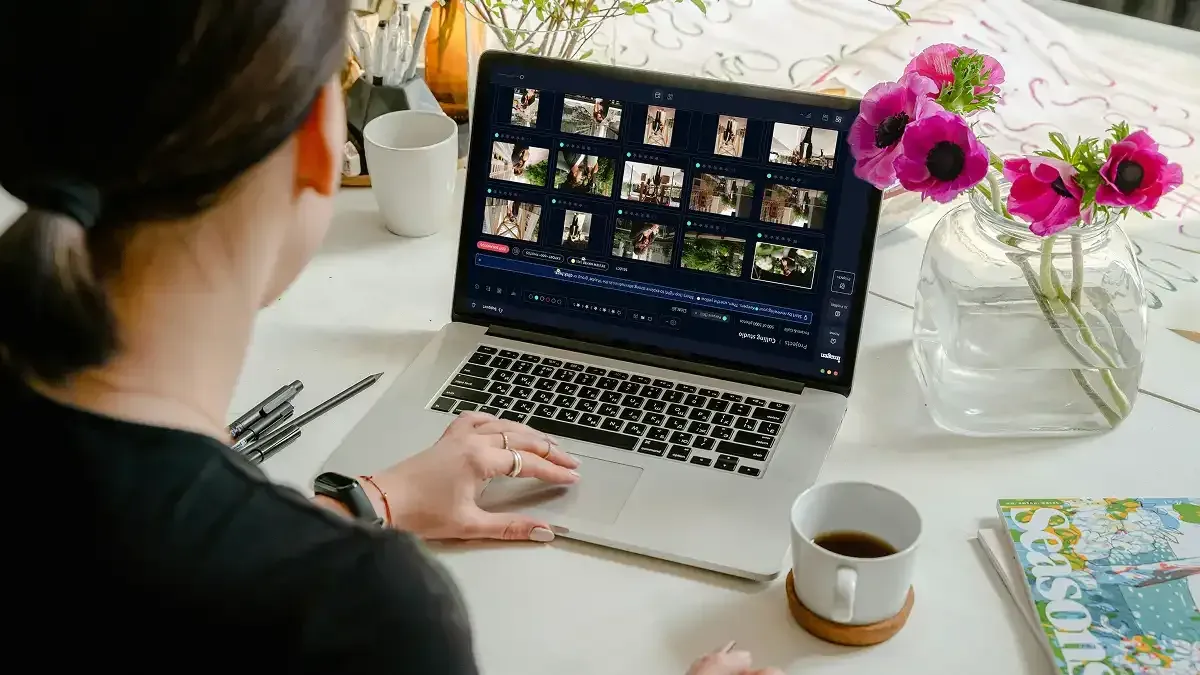
Imagen is a desktop app for Mac and Windows built for exactly this stage of event work. You download and install it, and the AI processing runs in the cloud. You point it at a full event take, and its personal AI style applies color correction, exposure, and white balance in your own consistent look across every frame. The arrivals, the speeches, and the after-party come back looking like one coherent gallery instead of three separate edits stitched together. Culling runs in the same project, so the near-duplicate bursts narrow down before the grade even begins. That is the idea behind Imagen’s new Studio, where you cull, edit, review and export in one project.
Where a single frame needs individual attention, the AI Assistant handles the exceptions per photo, covering object removal and background or plate blur. The framing stays simple: the batch grade handles the whole set, and the AI Assistant handles the one or two frames that need extra care, such as a stray exit sign or a cluttered background behind a portrait.
Pricing is pay-as-you-go, so you pay for the photos you export. You see every edit in the gallery before you export, so you can run a real event take through the batch and judge the result before you commit. Because the AI processing runs in the cloud and works on your RAW files, you can kick off a batch from a laptop the moment you get home and let it grade while you back up your cards, and since edited photos arrive in batches as they process, you can start reviewing early frames while the rest finish.
Reusable style profiles for shoot-to-shoot consistency
Consistency inside one event is only half the goal. Repeat clients and agencies also expect your galleries to look the same from booking to booking. This is where a reusable style profile earns its place in an event workflow. Rather than rebuilding your look every time, you apply the same learned style across every new take, so a conference you shoot in March and one you shoot in October carry the same signature.
For a photographer running a steady stream of events, that repeatability is a business asset. It shortens onboarding for second and third bookings, it keeps a team of second shooters delivering under one house style, and it makes your brand recognizable at a glance. A batch grade tied to a saved profile turns your personal look into something you can deploy in minutes on any volume of frames.
What batch software leaves to specialist tools
Honesty about limits keeps your workflow realistic. A batch color and tone grade is not the same job as heavy pixel-level repair, and no single tool is best at both. A few tasks belong to dedicated categories, and it helps to know where the handoff sits.
If a frame missed focus or came back soft, that is a job for a specialized detail-enhancement tool that sharpens, denoises, or upscales, and even those work within limits and cannot invent focus that was never captured. A batch grader does not rescue a blurry capture. Deep local skin retouching on a hero portrait, the kind that treats each face frame by frame, belongs to a dedicated retouching tool. Full background replacement or complex compositing is layer-based work for a manual editor. And when you deliberately bracketed for a high-contrast room and want a true multi-exposure HDR merge, that is a separate bracket-merging step rather than a single-frame grade.
The practical takeaway is to sequence these correctly. Cull and batch-grade the entire event first so the whole gallery is consistent and delivered fast, then hand the rare frame that needs deblurring, deep retouching, or a bracket merge to the specialist tool built for it. The batch layer removes ninety percent of the work; the specialist handles the exceptions.
How to choose batch editing software for event work
Start with your volume and your delivery deadline, because those two facts point straight at the answer. If you routinely deliver galleries of several hundred to several thousand frames and consistency across the set is the whole game, a batch-first tool that grades in your own style and finishes the first pass in under 10 minutes removes the bottleneck that event work creates. If you shoot lower volume and mostly want one file at a time to look finished, a lighter single-image tool may be enough.
Look for a few concrete traits. Does it cull and grade in one flow, so you are not shuttling between apps? Does it adapt the correction to each frame’s lighting rather than stamping identical settings? Does it hold a reusable style profile so your look repeats across bookings? Does it work on your RAW files and run without a heavy local install, so you can start a batch from anywhere? For event photographers, those questions matter more than any single slider, because they decide whether the software actually shortens your turnaround.
Many working event photographers run two tools rather than one: a batch grader for the volume and consistency, and a specialist app for the occasional frame that needs heavy sharpening, deep retouching, or a composite. The goal is not to crown one winner but to match each tool to the job it does best, and to stop paying for the hours a manual, frame-by-frame workflow quietly wastes.
If most of your volume work is weddings and events, three companion guides go deeper on the parts that eat the most hours. See batch photo editing software for wedding photographers, photo culling software for wedding photographers, and color grading software for wedding photography. You can also browse the full library of photography workflow tips for more on batch editing, culling, and consistent grading.
What’s new in Imagen: Imagen has grown into an intelligent, agentic Studio for professional photographers, a single project where you can cull, edit, review and export in whatever order suits the shoot. For batch work, AI editing runs in your personal style, learned from your past edits, or with ready-made AI Profiles, and you can apply more than one AI Profile to a selected set of photos. The Studio is being rolled out gradually, and it is still a beta.
Frequently Asked Questions
What is batch photo editing software for event photographers?
Batch photo editing software applies edits like color correction, exposure, and white balance across an entire event take in one pass instead of one frame at a time. For event photographers it also folds in culling, so near-duplicate bursts narrow down before grading. The result is a consistent gallery delivered in a fraction of the time a manual, frame-by-frame edit would take.
How does batch editing keep a large event gallery looking consistent?
AI-driven batch tools read each frame and adapt the correction to its specific lighting while holding to one overall style, so an outdoor arrival and a dim ballroom shot still match. Applying that grade across the whole take in a single pass, rather than editing files individually, is what prevents the slow drift that makes a long gallery look like several photographers shot it.
How much does Imagen cost, and is there a free trial?
Imagen’s pay-as-you-go pricing means you pay for the photos you export. That lets you run a real event take through the batch and judge the result before committing.
Can batch editing software fix blurry or out-of-focus event shots?
No. A batch color and tone grade does not sharpen or deblur a soft capture. Recovering detail from a missed-focus or noisy frame is the job of a dedicated detail-enhancement tool that sharpens, denoises, and upscales, and even those work within limits and cannot restore focus that was never captured. Cull and grade the set first, then send the rare problem frame to a specialist tool.
Should event photographers use one editing tool or several?
Many use two. A batch-first tool handles the volume and consistency for the whole event, finishing the first pass in under 10 minutes, while a specialist tool takes on the occasional frame that needs heavy sharpening, deep skin retouching, or a composite. Matching each tool to the job it does best is faster and cleaner than forcing one app to do everything.

