

The Rule of Odds in Photography Composition (2026)
Table of contents
- Rule of Odds in Photography Composition (2026)
- What the Rule of Odds Actually Means
- Why Odd Numbers Feel More Natural to the Eye
- The Power of Three in Practice
- How to Use the Rule of Odds on a Shoot
- When to Break the Rule of Odds
- Related Composition Rules Worth Pairing With It
- Carrying a Consistent Look Across the Whole Set
- Frequently Asked Questions
Rule of Odds in Photography Composition (2026)
The rule of odds photography principle says that an image with an odd number of subjects tends to feel more natural, balanced, and engaging than one with an even number. Photograph three flowers, five birds, or one lone tree, and the eye settles comfortably. Photograph two or four of the same thing, and the frame often feels split or static. This guide explains what the rule of odds is, why odd groupings work on the viewer, when to use it, and when to break it on purpose. It is a compositional tool, not a law, and the best photographers know exactly when to reach for it.
If you have ever wondered why a bouquet of three roses looks better than four, or why a portrait of one subject holds attention so easily, the rule of odds is a large part of the answer. Below you will find the reasoning, practical setups, and the related composition rules that make the whole thing click.
What the Rule of Odds Actually Means
The rule of odds is simple to state. When you group similar subjects in a frame, an odd count of one, three, five, or seven usually produces a stronger composition than an even count of two, four, or six. The most common and most powerful version is the group of three, which appears so often in art, design, and photography that it has its own nickname, the power of three.
The rule applies to repeated or related elements, not to every object in the scene. Three people sharing a moment, three trees on a ridgeline, or five stones in a stream all benefit. It does not mean you must count every leaf and pebble in a landscape. It means that when a set of clear, similar subjects becomes the focus, an odd number tends to read as more complete and more dynamic than an even one.
Why Odd Numbers Feel More Natural to the Eye
The reason odd groupings work comes down to how we look at an image. With an even number of subjects, the eye tends to pair them off. Two flowers become a matched set, and the gaze bounces back and forth between them without a clear resting place. Four subjects split into two pairs, and the composition can feel divided down the middle.
An odd number resists that pairing. With three subjects, one naturally becomes a center or an anchor while the other two frame it, so the eye moves around the group instead of ping-ponging between equals. That small amount of visual tension keeps the image active. Our brains also seem to enjoy the slight puzzle of a group that will not divide evenly, which holds attention a beat longer. The result feels organic, a little more like the way subjects actually cluster in nature.
The Power of Three in Practice
Three is the workhorse of the rule of odds, and it shows up across every genre. In a still life, three pieces of fruit arranged at slightly different heights create depth and rhythm that two never manage. In portraiture, a group of three subjects lets you build a triangle, with one person forward and two behind, which is far more engaging than a flat line of two or a boxy block of four.
Landscape and nature photographers lean on three constantly. Three trees, three peaks, three sheep on a hillside, each gives the eye a clear path to travel. Street and documentary shooters watch for three figures falling into a natural arrangement. Once you start looking, you will notice that many of your own strongest frames already contain a group of three, chosen instinctively before you ever named the rule.
How to Use the Rule of Odds on a Shoot
Putting the rule to work is mostly a matter of awareness and small adjustments. When you frame a scene with repeated subjects, count them. If you see four, look for a way to show three, either by changing your angle so one falls out of frame, stepping to hide one behind another, or waiting for a subject to move.
You can also add rather than subtract. If a still life has two objects, introducing a third often transforms it. When you photograph people, arrange three into a loose triangle instead of a straight row. For flowers or products, group them in threes or fives and stagger their heights so no two sit at exactly the same level. The goal is not rigid counting on every click. It is a habit of noticing when an odd grouping is available and nudging the frame toward it.
When to Break the Rule of Odds
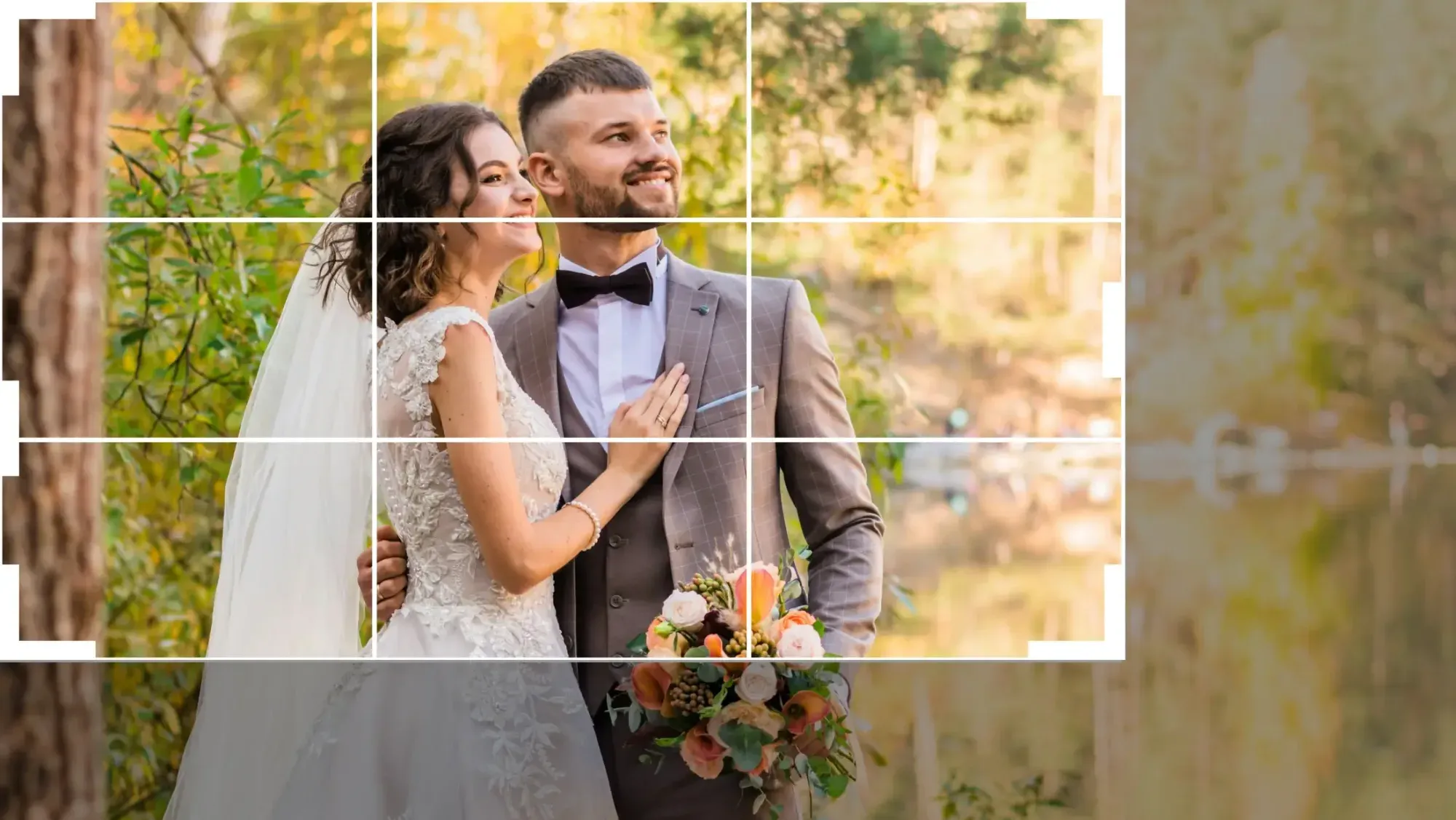
Like every composition guideline, the rule of odds is a starting point, not a cage. Even numbers can be exactly right when the story calls for them. A photograph of two people is often about the pair itself, the couple, the handshake, the confrontation, and forcing a third subject in would dilute the meaning. Symmetry, reflections, and formal balance frequently depend on even counts, and a perfectly mirrored scene can be more striking than any odd arrangement.
Large crowds also escape the rule entirely. Once a group grows past six or seven, the eye stops counting and reads it as a mass, so odd versus even no longer matters. The skill is knowing why you are choosing a number. Reach for odds when you want energy, movement, and a natural feel. Choose evens deliberately when you want pairing, symmetry, or a quiet, formal stillness. Breaking a rule on purpose is a decision, not a mistake.
Related Composition Rules Worth Pairing With It
The rule of odds rarely works alone. It pairs naturally with the rule of thirds, since placing your odd group along a third line or on an intersection strengthens both ideas at once. It also connects to the idea of a triangle or pyramid arrangement, which is really the rule of three expressed as a shape. Leading lines can guide the eye toward your odd grouping, and negative space around three subjects gives them room to breathe.
Thinking about how the elements in your frame relate is the heart of good composition. Understanding balancing elements in photography helps you decide when an odd group needs a counterweight elsewhere in the frame, and studying perspective in photography shows how depth and viewpoint change the way a group of three reads. Used together, these ideas turn a snapshot into a considered image. You can browse more of these ideas across the full library of photography workflow tips.
Carrying a Consistent Look Across the Whole Set
Nailing the composition in camera is only half the job. When you shoot a series that leans on the rule of odds, a florist’s catalog, a family session, a real estate listing, the frames need to look like they belong together after editing, not like a patchwork of separate corrections. That is where a batch editing layer earns its place. Imagen is a desktop app for Mac and Windows, now an intelligent Studio where you cull, edit, and export in one project, and it applies your own color correction, exposure, and white balance in a consistent style across an entire shoot, so a set of carefully composed odd groupings comes back as one coherent gallery.
Imagen applies your Personal AI Profile across the whole set. Culling lives in the same project as editing, so you can use AI culling to narrow the near-duplicate frames you shot while hunting for the right grouping, or skip it and cull manually for free. The assistant can find photos for you when you ask in plain language, and edited photos arrive in batches as they process, so you can start reviewing early frames while the rest finish. Pricing is pay on export: pay-as-you-go photographers pay for the photos they export. Sliders, crops, and masks you do yourself are always free. Worth stating plainly, Imagen grades and finishes what your camera recorded. It does not generate images from scratch, and it does not sharpen or deblur a soft frame, so getting the composition and the focus right in camera still matters most.
What’s new in Imagen: Imagen is now an intelligent, agentic Studio for professional photographers, one project where you cull, edit, review and export in any order. For a series built on odd groupings, the finish has to match from frame to frame, and your Personal AI Profile, learned from your own past edits, carries the same look across the whole set, with the built-in editor (Beta) close by for a quick crop or straighten. The Studio is rolling out gradually, so see it at Imagen.
Frequently Asked Questions
What is the rule of odds in photography?
The rule of odds is a composition guideline stating that an image with an odd number of subjects, such as one, three, or five, tends to feel more natural and engaging than one with an even number. The eye pairs off even groups and settles into them, while an odd group creates gentle visual tension that keeps the composition active. The group of three is the most common and most effective version.
Why do odd numbers work better in composition?
Odd numbers work because they resist visual pairing. With two or four similar subjects, the eye splits them into matched sets and bounces between equals, which can feel static. With an odd number, one subject becomes an anchor while the others frame it, so the eye travels around the group. That small amount of tension holds attention a beat longer and reads as more organic.
Is the rule of thirds the same as the rule of odds?
No, they are different but complementary. The rule of thirds is about where you place subjects in the frame, along imaginary lines that divide the image into thirds. The rule of odds is about how many similar subjects you include, favoring odd counts. They work well together, since placing an odd grouping on a third line strengthens both ideas at once.
When should I break the rule of odds?
Break it when the story calls for an even number. A photograph of a couple, a handshake, or a confrontation is about the pair, and adding a third subject would weaken it. Symmetry, reflections, and formal balance also rely on even counts. Large crowds escape the rule entirely, because once a group passes six or seven the eye stops counting and reads it as a mass.
Does the rule of odds only apply to groups of three?
No. Any odd number works, including one, five, or seven, and a single strong subject is a valid application of the principle. Three is simply the most popular because it is easy to arrange into a triangle and creates clear depth and rhythm. As numbers grow larger, the visual difference between odd and even fades, so the rule matters most with small, countable groups.

