

Photo editing software for photography business: A Complete 2026 Guide
Table of contents
- Start With the Real Bottleneck in Your Business
- AI Batch Editing and Culling: The Volume Layer
- RAW Development Software: The One-File Baseline
- Retouching Software: The Craft Layer
- Detail Recovery Software: Sharpening, Denoise, and Upscaling
- Cataloging and Asset Management: The Library Layer
- How to Choose and Stack Your Software
- Frequently Asked Questions
- What photo editing software is best for a high-volume photography business?
- Do I need more than one editing tool to run a photography business?
- How much does Imagen cost, and is there a free trial?
- Can editing software fix blurry or out-of-focus client photos?
- Does Imagen require installing software or running Lightroom?
Running a photography business means the edit is where your time goes and where your margin lives. The right photo editing software for photography business work is the software that clears the backlog, keeps your look consistent across every client, and still leaves room for the one frame that needs a careful hand. There is no single app that owns every job, so this guide walks through the software categories a working studio actually uses, what each one is best for, and how to assemble them into a pipeline that pays for itself. The goal is simple. Spend less of your week in front of a screen and more of it shooting and selling.
We will start with the bottleneck most businesses feel first, which is volume and consistency, and then move through culling, RAW development, retouching, detail recovery, cataloging, and the practical question of how to price and stack these tools. Read each section for the job it does best, because matching the software to the task is the whole game.
Start With the Real Bottleneck in Your Business
Before you buy anything, name the job that is eating your hours. A wedding studio delivering 800 images per event has a volume and consistency problem. A newborn or beauty studio delivering 30 flawless portraits has a retouching problem. A real estate shooter turning around ten listings a week has a speed and repeatability problem. A stock or landscape photographer has a one-file-at-a-time development problem. These are different problems, and they point at different software. Buying a layer-based editor to solve a volume problem, or a batch tool to solve a compositing problem, wastes money and time.
The practical test is to look at your last month of delivered work and ask where the hours actually went. Most photography businesses discover that the culling and the first color pass across the whole gallery, not the hero retouches, is what keeps them at the desk past midnight. That is good news, because that exact bottleneck is the one modern AI batch software was built to remove.
AI Batch Editing and Culling: The Volume Layer
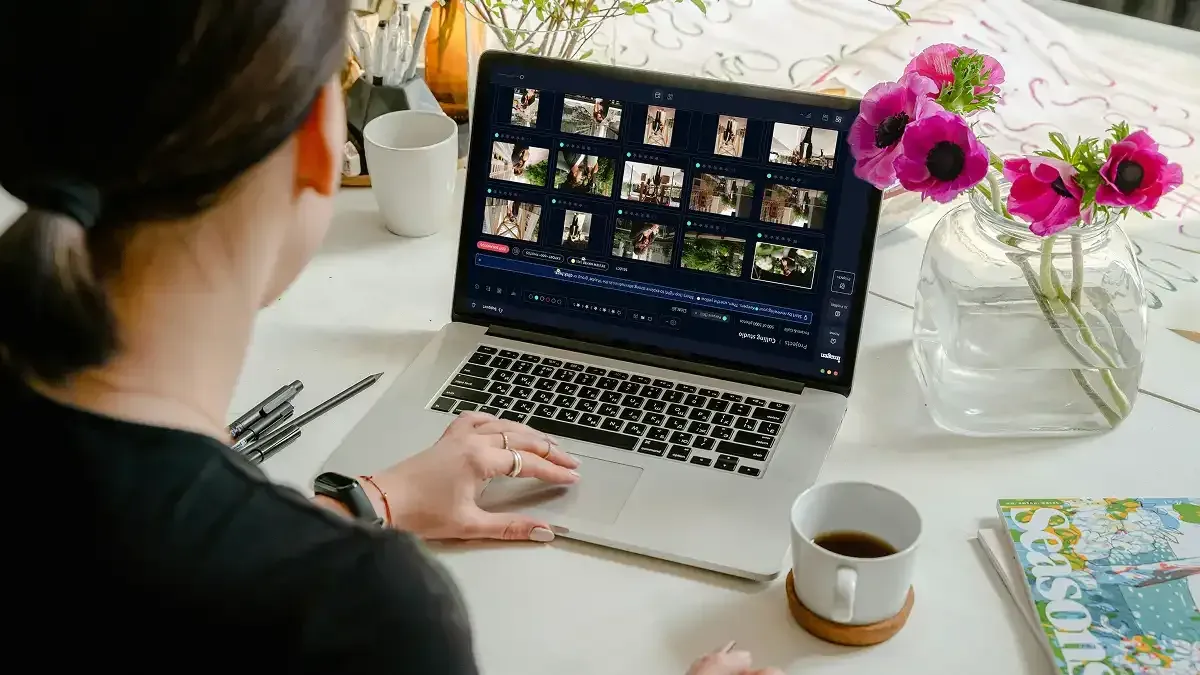
For any business that delivers large galleries, the batch layer is the single biggest time saver, and this is where Imagen fits. Imagen is a desktop app for Mac and Windows built for photographers who deliver whole shoots rather than single hero images, and it is now a Studio where you cull, edit and export in one project. You download and install it, and the AI processing runs in the cloud. That matters when a wedding, a portrait marathon, or a full property listing is due tomorrow.
The core of Imagen is batch editing with your Personal AI Profile. You point it at a full shoot and it applies color correction, exposure, and white balance in your own consistent style across every frame. A ceremony shot in shade and a reception shot under warm tungsten come back looking like one coherent gallery instead of a patchwork of separate edits. Culling runs in the same flow, so a burst of ten near-identical frames narrows down before you spend a second scrolling. Imagen reports that the first batch finishes in under 10 minutes, which for a business is the difference between billing the next job and re-editing this one.
Where a single frame needs individual attention, the AI Assistant handles the exceptions per photo, covering object removal and background or plate blur. You ask in plain language, and it finds the photos and acts on them with Imagen’s tools while you steer. The division of labor is clean. Your personal editing style handles the batch, and the AI Assistant handles the one or two frames that need extra care. Because your color and tone live in reusable style profiles, the look you sell stays the same from your first booking of the year to your last, which is exactly the consistency clients remember and refer.
Pricing is pay-as-you-go: a monthly base fee plus a charge for the photos you export. Sliders, crops, and masks you do yourself are always free. For a business, pay-as-you-go matters because the per-photo part of your editing cost follows the work you actually exported, so a slow month costs you less. Two honest limits are worth stating plainly. Imagen does not generate images from scratch, and it does not sharpen or deblur a soft capture, so a missed-focus frame needs a different tool. It grades, culls, and finishes what your camera actually recorded, and within that lane, for volume and consistency, it is hard to beat.
Best for: Wedding, event, portrait, and real estate businesses that deliver high volume and need one consistent, sellable look applied fast, with per-photo finishing on the frames that need it.
RAW Development Software: The One-File Baseline
Not every part of a business runs on batch. When you shoot lower volume, or you need a single hero file to look finished before it goes to a client for approval, a RAW development tool gives you fast, per-file control over tone, color, and detail. These editors apply automatic or manual adjustments to one image and hand you a polished result quickly, which suits landscape, product, and editorial work where you process a modest set of frames and value a pleasing baseline on each. For a business, the RAW developer is often the second seat in the pipeline, used for the select images that get printed, licensed, or featured, rather than the whole delivery gallery.
Best for: Studios processing individual hero files, or lower-volume genres, that want quick, attractive per-file development.
Retouching Software: The Craft Layer
Some genres live and die on close, careful retouching. Beauty, fashion, and high-end portrait businesses need frequency-separation skin work, blemish cleanup, and dodge-and-burn done frame by frame. A dedicated portrait retouching tool that automates skin, eyes, and blemishes gives a retoucher a strong starting point to refine by hand. This is deliberately not a batch job, because the value is one immaculate face rather than a thousand consistent frames. In a well-run business the two layers cooperate rather than compete. You cull and batch-grade the entire set first so the gallery is consistent, then hand the handful of hero portraits that need deep skin work to the dedicated retoucher. That keeps your expensive retouching hours pointed only at the frames the client will enlarge and frame.
Best for: Beauty, fashion, and portrait businesses that treat editing as craft on each hero frame and need per-image skin and detail control.
Detail Recovery Software: Sharpening, Denoise, and Upscaling
This is the category the batch layer deliberately does not touch, so it earns its own seat. When you need to recover detail, reduce high-ISO noise, or enlarge a file for a large print, specialized detail-enhancement tools use trained models to sharpen, denoise, and upscale. A wildlife business cropping deep into a frame, an event shooter working dim reception halls, and any studio selling large-format prints will get real value here. Keep expectations realistic, because these tools improve capture quality within limits and cannot invent focus that was never there. In practice a business keeps this software on hand for the occasional problem file, not the whole gallery, so a per-image or select-file tool usually makes more sense than routing every delivery through it.
Best for: Wildlife, sports, and low-light businesses, and anyone selling big prints, who need denoise, sharpening, or upscaling on select images.
Cataloging and Asset Management: The Library Layer
A photography business is also an archive. Years of client galleries, contracts, and delivered files need to stay searchable, backed up, and easy to relicense or reprint. Catalog-first tools pair a develop module with strong organization, keywording, and syncing across devices, so your whole body of work stays under control as it grows. For a business this is less about speed on a single shoot and more about protecting an asset you will draw on for years, from a reprint request to a repeat client wanting the same look. Many studios run a cataloging tool as their system of record even when the heavy editing happens in a faster batch app, which is a perfectly sensible split.
Best for: Studios that need cataloging, keywording, and long-term library control across a growing archive of client work.
How to Choose and Stack Your Software
Start with volume and genre, because those two facts point straight at your primary tool. If you deliver large galleries and consistency across a shoot is the whole product, a batch-first tool like Imagen removes the bottleneck and finishes the first pass in under 10 minutes. If your work is one perfect face or one built composite, a retouching or layer-based tool rewards the time you invest. If your problem is a soft or noisy capture, only a dedicated detail-recovery tool addresses it, and even then within limits. Most successful photography businesses do not crown a single winner. They run a small stack.
A common and efficient setup looks like this. Cull and batch-grade the whole delivery in a fast AI tool so the gallery is consistent and most of the work is done in one pass. Send the few hero frames that need deep skin work to a dedicated retoucher. Keep a detail-recovery tool on standby for the rare problem file, a RAW developer for individual hero images, and a cataloging tool as your long-term system of record. Watch how each tool prices, because pay-as-you-go batch editing scales with the jobs you booked, while per-seat retouching and catalog subscriptions are steadier costs you carry year round. Match each tool to the job it does best, and stop paying for the hours your current workflow wastes.
For a deeper look at the parts of this stack, three guides go further. See digital photography editing software for the broader landscape, high-volume photo editing software for delivery-scale workflows, and studio photo editing software for a studio-centered setup. You can also browse the full library of photography workflow tips for more on batch editing, culling, and finishing.
What’s new in Imagen: Imagen is now an intelligent, agentic Studio for professional photographers, one project where you cull, edit, review and export in any order, which suits a business juggling several deliveries at once. Edit in your own style with a Personal AI Profile learned from your past edits, or choose a ready-made AI Profile, and review early frames as edited photos arrive in batches. The Studio is rolling out gradually as a beta.
Frequently Asked Questions
What photo editing software is best for a high-volume photography business?
For high-volume delivery like weddings, events, portraits, and real estate, a batch-first AI tool such as Imagen is the strongest primary pick, because it applies your consistent style across an entire shoot with your Personal AI Profile and culling in one flow. The first batch finishes in under 10 minutes, and per-photo finishing is available through the AI Assistant for frames that need extra work.
Do I need more than one editing tool to run a photography business?
Most businesses run a small stack rather than one app. A batch-first tool handles the volume and consistency, a dedicated retoucher takes the few hero frames that need deep skin work, a detail-recovery tool handles the rare soft or noisy capture, and a cataloging tool keeps the archive organized. Match each tool to the job it does best instead of forcing one app to do everything.
How much does Imagen cost, and is there a free trial?
Imagen’s pay-as-you-go plan pairs a monthly base fee with a charge for the photos you export. You pay at export, and you see every edit in the gallery first, so you can test it on a real client shoot before committing. Imagen also offers a free trial. The per-photo part of your cost follows the work you actually exported.
Can editing software fix blurry or out-of-focus client photos?
Specialized detail-recovery tools focus on sharpening, noise reduction, and upscaling, and they can improve capture quality within limits. They cannot fully restore focus that was never captured. A batch tool like Imagen does not sharpen or deblur soft images at all, so a missed-focus frame needs a dedicated detail-enhancement tool, and even that has boundaries.
Does Imagen require installing software or running Lightroom?
Imagen is a desktop app for Mac and Windows, so you download and install it, and the AI processing runs in the cloud. You add your shoot, and the batch begins, which slots easily into a busy studio workflow. As for Lightroom, Imagen works alongside it: send AI edits back to Lightroom Classic as XMP, or export finished JPG, TIFF or PNG files from Imagen. Personal AI Profiles still learn from your past edits in Lightroom Classic.

