
Outsource Photo Editing Cost Per Image: 2026 Pricing Guide
Table of contents
- Key Takeaways
- Foundations: Understanding the world of Photo Editing Outsourcing in 2026
- The 2026 Pricing Spectrum: From AI to Boutique Retouching
- Calculating Your True ROI and “Hidden” Costs
- Building a Scalable Hybrid Workflow with AI
- Niche-Specific Pricing Realities: Wedding, E-com, and Real Estate
- How to Choose an Outsourcing Partner in 2026
- Future-Proofing Your Business Against Rising Costs
- Frequently Asked Questions
- What is a realistic cost per image for outsourcing wedding photo editing?
- Is AI photo editing good enough for professional photographers?
- How many photos do I need to start with an AI editing service?
- What’s the difference between a Personal AI Profile and a Talent AI Profile?
- Can I outsource just the culling process?
- Does outsourcing photo editing mean I lose creative control?
- How do I account for outsourcing costs in my client pricing?
- Is my data safe when I upload photos to an AI service?
You’re drowning in photos. For every hour you spend behind the camera creating powerful, you’re spending three, four, maybe even ten hours chained to your desk, tweaking sliders in Lightroom. You know outsourcing is the answer to getting your life back, but the pricing seems like a black box. What’s a fair outsource photo editing cost per image in 2026?
Look, it’s not just about finding the cheapest option. It’s about finding the smartest one. The right choice saves you time, makes you more money, and keeps your clients happy without sacrificing your unique artistic style. the real numbers, from pennies to premium, so you can make a decision that scales your business.
Key Takeaways
- AI Editing is the New Baseline - In 2026, AI-powered editing with tools like Imagen costs a small monthly base fee plus a per-export charge, well below manual rates, while offering up to a 90% reduction in post-production time.
- Traditional Outsourcing Costs - Standard human-based editing for basic corrections typically costs between $0.20 and $0.50 per photo, with a 24-48 hour turnaround time.
- High-End Retouching is a Different Beast - For detailed work like skin smoothing and object removal, expect to pay $5.00 to $15.00 per photo, sometimes much more.
- Calculate Your True Cost - Your internal editing cost is likely between $0.83 and $1.50 per photo when factoring in an average US photo editor’s wage. Don’t forget to account for the 3-5% revision rate common with manual services.
- Volume Dictates Strategy - A wedding photographer shooting 3,000 photos per event has different needs than an e-commerce studio needing consistent background removal. The per-image cost must match the business model.
- Hybrid Workflows Maximize ROI - The most profitable strategy involves using AI for the bulk of your editing and culling, then reserving your budget for high-end manual retouching on only the top 5% of “hero” photos.
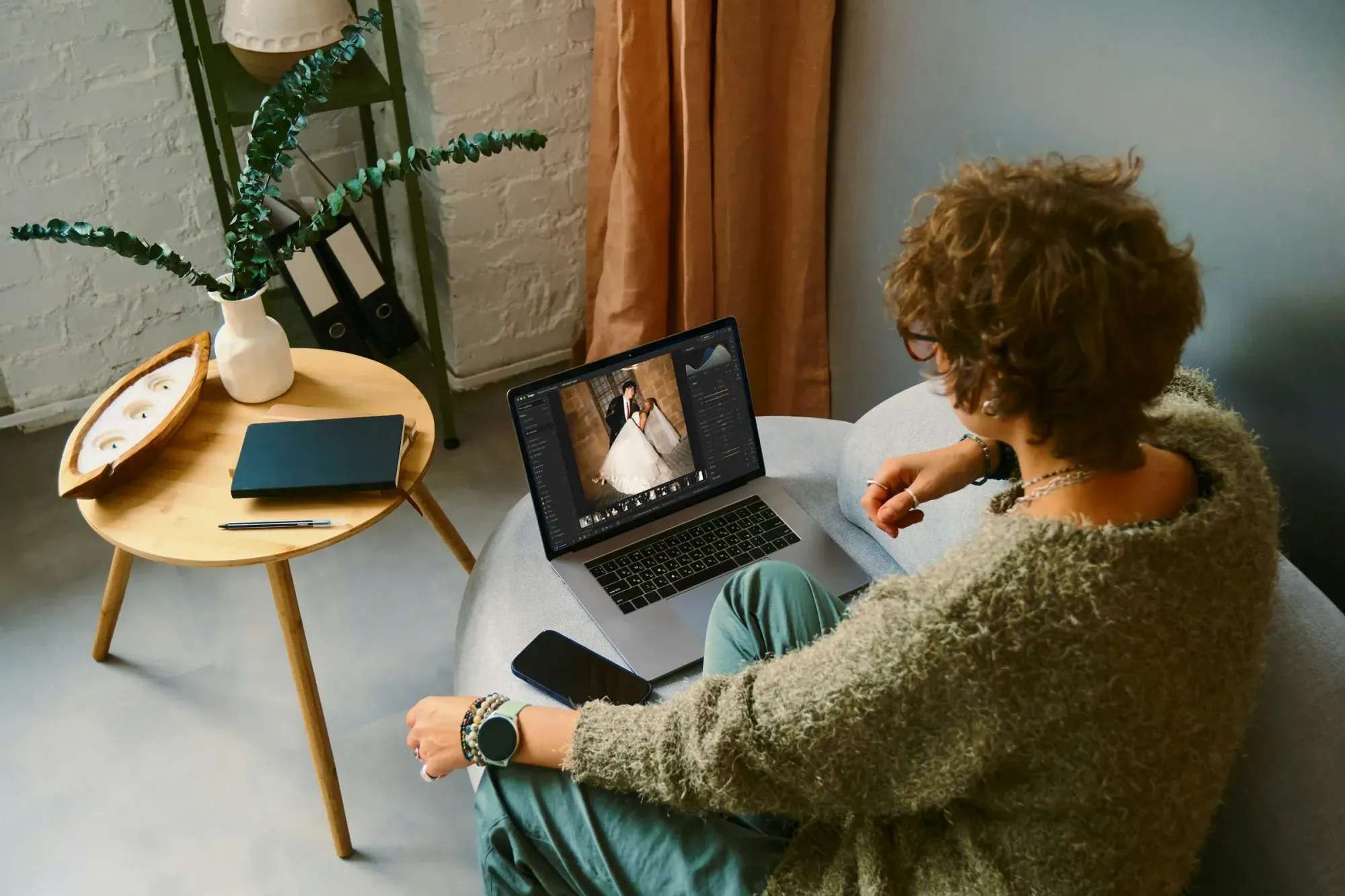
Foundations: Understanding the world of Photo Editing Outsourcing in 2026
Let’s get one thing straight: the world of photo editing has fundamentally changed. The old model of sending a hard drive packed with RAW files to an editor overseas and waiting a week is becoming obsolete. Why? Because the math just doesn’t work anymore for most working photographers.
The entire photo editing software market is exploding, projected to hit $1.6 billion by 2030. This growth isn’t just about more people using Photoshop; it’s driven by a massive shift towards automation and AI. In fact, a 2024 survey showed that 68% of professional photographers now use some form of AI in their workflow. They aren’t doing it because it’s trendy. They’re doing it to survive.
The Evolution of the “Per Image” Model
Years ago, you’d hire an editor at an hourly rate. This was a nightmare for budgeting. A difficult shoot with bad lighting could double your editing bill, while an easy one might cost less. It was unpredictable and risky.
So, the industry standardized around the per-photo pricing model. It’s simple, transparent, and scalable. You know exactly what a 3,000-photo wedding gallery will cost to edit before you even begin. This allows you to build editing costs directly into your client packages, protecting your profit margins. But now in 2026, this model has split into distinct tiers based on the technology used, not just the editor’s location.
Why Photographers Outsource in 2026
The core reasons for outsourcing haven’t changed: more time to shoot, faster delivery to clients, and better work-life balance. What has changed is the level of control you can maintain. Early outsourcing often meant compromising your unique style. You’d get back photos that were technically correct but lacked your signature look.
Modern AI tools have solved this. A platform like Imagen uses a Personal AI Profile trained on your own edited photos. It doesn’t apply a generic preset; it learns your specific adjustments for exposure, white balance, color grading, and more. This gives you the scalability of outsourcing with the consistency of editing yourself. It’s the balance photographers have been seeking for over a decade.
The 2026 Pricing Spectrum: From AI to Boutique Retouching
Not all editing is created equal. The cost per photo can vary by a factor of 100 or more depending on the complexity of the work and the method used. Here’s a clear breakdown of the main pricing tiers you’ll encounter in 2026. This isn’t just about cost; it’s about matching the right service to the right job.
| Service Tier | Cost Per Photo (2026 Avg.) | Best For | Typical Turnaround | Example Services |
|---|---|---|---|---|
| Tier 1: AI-First Editing | Base fee plus export charge | High-volume events (weddings, sports), portraits, initial culling & basic adjustments. | 5-20 minutes | Imagen |
| Tier 2: Standard Offshore Outsourcing | $0.20 - $0.50 | Basic color correction, exposure adjustments, batch processing with human oversight. | 24-48 hours | FixThePhoto, ShootDotEdit |
| Tier 3: E-commerce & Product Editing | $0.70 - $2.50 | Background removal, color matching, shadow creation, ghost mannequin. | 12-24 hours | Pixelz, Path |
| Tier 4: Premium & Boutique Retouching | $5.00 - $50.00+ | High-end fashion, beauty, commercial advertising, composite work. | 48-72 hours | High-end Freelancers, Retouching Studios |
As you can see, the price differences are massive. A wedding photographer using Imagen for a 3,000-photo gallery pays a monthly base fee plus a per-export charge, well below what the same gallery would cost at a standard offshore service, where the bill can jump to $750 or more. The key is understanding what you’re paying for. The AI tool gets you near-instant, consistent edits based on your style, at a fraction of manual rates. The $0.25 from a manual service gets you a human interpretation of “good,” which may or may not match your vision and comes with a significant time delay.
Calculating Your True ROI and “Hidden” Costs
The sticker price per photo is only part of the story. To understand the real value, you need to calculate your return on investment (ROI) and be brutally honest about the hidden costs of cheap manual labor. It’s a classic “penny wise, pound foolish” scenario.
The Cost of Revisions and Communication
Let’s take a standard offshore editing service that charges $0.25 per photo. Seems cheap, right? But what happens when the edits come back and they’re not quite right? The industry average revision rate for these services is around 3-5%. For a 1,000-photo gallery, that’s 30-50 photos you’ve to review, annotate, and send back.
Now, factor in your own time. Let’s say you bill your time at a conservative $75/hour. If you spend just one hour managing feedback and revisions for that gallery, you’ve added $75 to the total cost. The original $250 bill is now $325. Your effective cost per photo just jumped from $0.25 to $0.325. This doesn’t even account for the mental energy drain and the delay in delivering the gallery to your client.
Opportunity Cost: Shooting vs. Editing
Here’s the most important calculation a photographer can make. First, figure out your internal cost of editing. The average hourly wage for a photo editor in the U.S. is between $25 and $45. Let’s use $35/hour.
- Time per photo - Let’s say it takes you, a skilled professional, an average of 2 minutes to edit one photo from a wedding gallery.
- Photos per hour - At 2 minutes per photo, you can edit 30 photos per hour.
- Internal cost per photo - $35 (your hourly rate) divided by 30 photos is approximately $1.17 per photo.
Suddenly, paying an AI tool like Imagen a small per-export fee doesn’t just seem cheap; it seems like a financial no-brainer. Every hour you spend doing a task that costs only cents and could be automated is an hour you’re not spending on a high-value task like marketing, client consultations, or actually shooting a session that could earn you $500 or more. That’s the real “hidden cost”: the money you aren’t making because you’re stuck behind a computer.
Building a Scalable Hybrid Workflow with AI
The smartest, most profitable photographers in 2026 aren’t choosing between AI and a human editor. They’re using both in a strategic, hybrid workflow. This approach gives you the speed and cost-efficiency of AI for the bulk of your work, while saving your budget and attention for the photos that truly matter. It’s about working smarter, not harder.
Here’s how you can build this exact workflow, step-by-step.
-
Step 1: Automate Culling with AI
Before you even think about editing, you’ve to cull. For a typical wedding photographer, culling a 4,000-photo shoot can take four to six hours of mind-numbing work. This is the perfect job for AI. A tool like Imagen’s AI Culling analyzes your entire shoot for critical focus, closed eyes, bad expressions, and duplicates. It groups similar photos together and highlights the best ones. This process doesn’t just save you hours; it presents you with a much smaller, more manageable set of photos to move to the editing stage. You might go from 4,000 photos down to 800 “selects” in under 30 minutes. If you would rather cull by hand, manual culling in Imagen is free.
-
Step 2: Apply Your Style with a Personal AI Profile
Now, take those 800 culled photos and run them through your Personal AI Profile. Because the AI has been trained on thousands of your own past edits, the results you get back in minutes will be remarkably close to what you would have done yourself. Studies show that this process can reduce total post-production time by up to 90%. You’ll get back a gallery that’s 95% of the way there. The white balance is correct, the exposure is dialed in, and the colors reflect your signature style. The cost for this step? A small monthly base fee plus a per-export charge, well below manual editing rates for a gallery this size.
-
Step 3: Final Human Polish for “Hero” Images
From that gallery of 800 AI-edited photos, you can now quickly flag the 20-30 “hero” shots. These are the portfolio pieces, the wall art, the double-page album spreads. These are the only photos that warrant the expense and time of high-end manual retouching. You can now send just these 25 images to a professional retoucher for things like detailed skin work, object removal, or head swaps. At $10 per photo, this final step costs $250. Add the small cost of AI culling and editing, and the total for the entire wedding is still a fraction of what it would have cost to have a human edit the entire thing from scratch.
The most significant bottleneck in a photography business isn’t capturing the images; it’s the post-production workflow. By strategically applying AI for the 95% of work that’s repetitive-culling and base corrections-photographers free up capital and creative energy to perfect the 5% of images that define their brand and drive sales.
Itamar Haim, SEO Expert and Digital Strategist specializing in search optimization and content marketing.
Niche-Specific Pricing Realities: Wedding, E-com, and Real Estate
The ideal “cost per photo” isn’t a universal number. It’s deeply tied to the economics of your specific photography niche. The pressures on a wedding photographer are vastly different from those on a product or real estate photographer. Understanding these differences is key to choosing the right outsourcing strategy.
Wedding Photography: Managing the 3,000-Image Load
A typical wedding photographer captures between 2,000 and 4,000 images per event. Manually editing this volume is a recipe for burnout. The primary goal here’s consistency and speed across a massive gallery.
- The Challenge - Profit margins are tight, and clients expect their photos within a few weeks. Spending $0.25 per photo would mean a $750-$1,000 editing bill for a single wedding, which is unsustainable for most business models.
- The Solution - This is where low-cost, high-volume AI editing is a perfect fit. Using an AI photo editing tool that applies your personal style costs a fraction of that, allowing you to deliver a consistently edited gallery quickly and profitably. Some services like ShootDotEdit offer unlimited plans for around $119/month, but these often lack the personalization of an AI Profile.
E-commerce: The Need for Consistency and Volume
For e-commerce, the game is all about precision and uniformity. Every product needs to be shot on a pure white background, color-matched to the real item, and perfectly aligned. A reported 75% of online shoppers rely on product photos to make a purchase decision.
- The Challenge - The editing is highly technical (background removal, clipping paths) and must be identical across thousands of SKUs. Individual artistic style is less important than brand consistency.
- The Solution - Specialized e-commerce editing services are the answer. Their per-photo cost (often $0.70 to $1.50) is higher than basic correction but includes these technical tasks. Their workflows are built for this specific purpose, ensuring every photo meets marketplace requirements for sites like Amazon or Shopify.
Real Estate: Speed as a Competitive Advantage
In real estate photography, time is literally money. Homes with high-quality professional photography sell 32% faster. Realtors need the photos yesterday to get a listing live. A 48-hour turnaround is often too slow.
- The Challenge - The editing often involves more than basic corrections. It requires HDR blending, window pulls, sky replacements, and perspective correction to make a property look its best.
- The Solution - Many real estate photographers build the cost of premium, fast-turnaround editing into their packages. Paying $1.50 to $5.00 per photo for a 12-hour turnaround is a competitive advantage. It allows the agent to list the property faster, which reflects well on the photographer and leads to repeat business.
How to Choose an Outsourcing Partner in 2026
Making the leap to a new outsourcing partner, whether it’s an AI platform or a human team, can feel daunting. You’re entrusting them with your work and your brand’s reputation. To make a confident choice, you need a clear vetting process. Here’s a checklist of what to look for.
Your Vetting Checklist:
- Turnaround Time (TAT) - Does their promised delivery time align with your client’s expectations? For AI services like Imagen, turnaround is measured in minutes. For manual services, the standard is 24-48 hours. Anything longer should be a red flag unless it’s for extremely high-end retouching.
- Style Consistency - This is the big one. How do they ensure the edits match your style? Look for services that offer a trial or onboarding process where you submit a portfolio of your edited work. For AI platforms, this means checking if they offer a Personal AI Profile creation process. Don’t settle for generic presets.
- Software Integration - A smooth workflow is non-negotiable. The service must integrate directly with your primary editing app, whether that’s Adobe Lightroom Classic or Capture One. A good integration means you aren’t wasting time exporting and importing thousands of files. It should feel like a natural extension of your existing process.
- Revision Process and Cost - What happens when an edit isn’t right? Clarify their revision policy. Is it free? Is there a limit? A high manual revision rate (over 5%) is a strong indicator of poor quality control or a mismatch in style.
- Security and Data Privacy - You’re uploading your clients’ memories and your own intellectual property. Ensure the company has a strong privacy policy. Where are your photos stored? Who has access to them? If using an AI tool, confirm how your data is used for training. Reputable companies will be transparent about this.
- Scalable Pricing - Does their pricing model grow with your business? Look for pay-as-you-go options or tiered plans that make sense for your volume. Check the latest Imagen pricing to see an example of a flexible structure that serves photographers at all levels, where you pay for the photos you export. Sliders, crops, and masks you do yourself are always free.
Future-Proofing Your Business Against Rising Costs
The cost of doing business never goes down. Inflation affects labor rates, software subscriptions go up, and client expectations continue to rise. If your post-production workflow relies entirely on manual human labor, your costs are directly tied to these economic pressures. The key to long-term profitability is to insulate your business from these variables as much as possible.
Embracing the “AI-Plus” Model
The “AI-Plus” model is the most resilient strategy for 2026 and beyond. It’s not about replacing humans but about reallocating human effort to where it provides the most value.
- AI for the 95% - Use AI for the repetitive, time-consuming tasks. This includes culling thousands of photos, applying base corrections, straightening horizons, and performing subject masking. These are binary tasks that algorithms can perform with incredible speed and accuracy at a rock-bottom price.
- Human for the 5% - Reserve your time (or the time of a high-end retoucher) for the final creative polish on your best images. This is where artistry comes in: nuanced dodging and burning, creative color grading, and complex composites. When you’re only paying for this premium work on a handful of photos, the cost is easily absorbed.
Pro Tip: Build an “editing budget” into your Cost of Goods Sold (COGS) for every package you sell. By standardizing on a low-cost AI solution like Imagen, you can set a predictable base cost for each package, built on your monthly base fee plus the photos you export. Then, you can add a separate line item for “premium retouching” in your higher-tier packages, treating it as a profitable add-on rather than a sunken cost.
By adopting this approach, you’re not just saving money today. You’re building a more efficient, scalable, and profitable business that can weather economic shifts and keep you focused on what you love: creating beautiful photographs.
What’s new in Imagen: The latest Imagen is an intelligent, agentic Studio for professional photographers, where you cull, edit, review and export inside one project and in any order. Before you price out an outside editor, see what it can do in house: AI culling, or free manual culling, narrows a big take, a Personal AI Profile edits in your own style, and edited photos arrive in batches so you can start reviewing early. Pay-as-you-go photographers pay for the photos they export. Rolling out gradually. Look into it at Imagen.
Frequently Asked Questions
What is a realistic cost per image for outsourcing wedding photo editing?
For 2026, a realistic and profitable cost for bulk wedding photo editing comes from an AI-powered tool like Imagen, where you pay a monthly base fee plus a charge for each photo you export. Traditional manual editing services will cost significantly more, from $0.25 to $0.50 per photo, which can quickly become unprofitable for large galleries.
Is AI photo editing good enough for professional photographers?
Yes, absolutely. Modern AI tools that use a Personal AI Profile are trained on your own unique editing style. The result isn’t a generic filter; it’s a reflection of your own work, applied consistently across thousands of photos in minutes. It’s used by top-tier professionals worldwide.
How many photos do I need to start with an AI editing service?
To create a strong Personal AI Profile with a tool like Imagen, a minimum of 5,000 edited photos from your Lightroom catalog is recommended. This provides the AI with enough data to accurately learn your specific adjustments for various lighting conditions and camera settings.
What’s the difference between a Personal AI Profile and a Talent AI Profile?
A Personal AI Profile is trained exclusively on your own past edits to replicate your unique style. A Talent AI Profile is a pre-built profile created in collaboration with a world-renowned photographer. It allows you to apply their signature style to your photos instantly, without needing to train your own.
Can I outsource just the culling process?
Yes. Many photographers start by outsourcing only the culling process to save time. Services like Imagen’s AI Culling can analyze a shoot and deliver a curated selection of the best images, which you can then edit yourself. In Imagen, culling and editing share one project, so you can stop after culling or carry straight on to editing when you are ready. It’s a great first step into automated workflows.
Does outsourcing photo editing mean I lose creative control?
Not anymore. With older manual services, this was a common concern. But with AI that learns from you, you actually gain more control. You define the style, and the AI executes it perfectly every time, freeing you to focus on the final creative touches for your most important photos.
How do I account for outsourcing costs in my client pricing?
You should treat your editing costs as a direct Cost of Goods Sold (COGS). Calculate your average editing cost per event, such as your plan’s base fee plus the export charge for 800 final photos, and build that number directly into your package pricing to ensure you’re always profitable.
Is my data safe when I upload photos to an AI service?
Reputable companies prioritize data security. They use secure servers and have clear privacy policies that state how your photos are used. Always review a service’s policy to ensure your images aren’t being used for purposes you don’t agree with.