

Outdoor Wedding Photography: Tips and AI Editing (2026)
Table of contents
- Plan the Timeline Around the Sun, Not the Clock
- Tame Harsh Midday Sun
- Use Backlighting for Depth and Glow
- Pack Gear That Keeps You Covered Outdoors
- Run Group Shots Fast and Clean
- Build a Real Weather Backup Plan
- Bring the Whole Day to One Look With AI Editing
- Keep Learning the Craft
- Frequently Asked Questions
Outdoor wedding photography rewards you with light and space that no studio can match, and it punishes you the moment a cloud moves or the ceremony slides an hour late. The whole craft comes down to reading natural light and having a plan for every version of it, from soft golden hour to brutal noon sun to a sudden gray sky. This guide walks through the shooting decisions that matter most on the day, the gear that keeps you covered, and one honest look at how AI editing pulls a full day of shifting outdoor light into one consistent gallery afterward.
The advice below is ordered the way a wedding actually unfolds, from planning the timeline around the sun to handling the hardest light, running group shots, and building a weather backup. Read it as a shooting playbook first, because the best editing in the world cannot fix a frame you did not capture well.
Plan the Timeline Around the Sun, Not the Clock
The single most valuable thing you can do for an outdoor wedding happens weeks before the day, when you help the couple place their timeline against the sun. Golden hour, the roughly sixty minutes after sunrise and before sunset, gives you warm, low, forgiving light that flatters skin and wraps subjects in soft edges. If the couple wants portraits that look like the ones that made them hire you, that session belongs near sunset whenever the schedule allows.
Use a sun-tracking app to find exact sunset time and direction for the venue on the wedding date, then work backward. A ceremony at high noon in open sun is the hardest possible assignment, while the same ceremony ninety minutes before sunset almost edits itself. You will not always win this argument, because caterers and venues have their own clocks, but even shifting the portrait of the couple block to the golden window changes the entire feel of the final gallery.
Tame Harsh Midday Sun
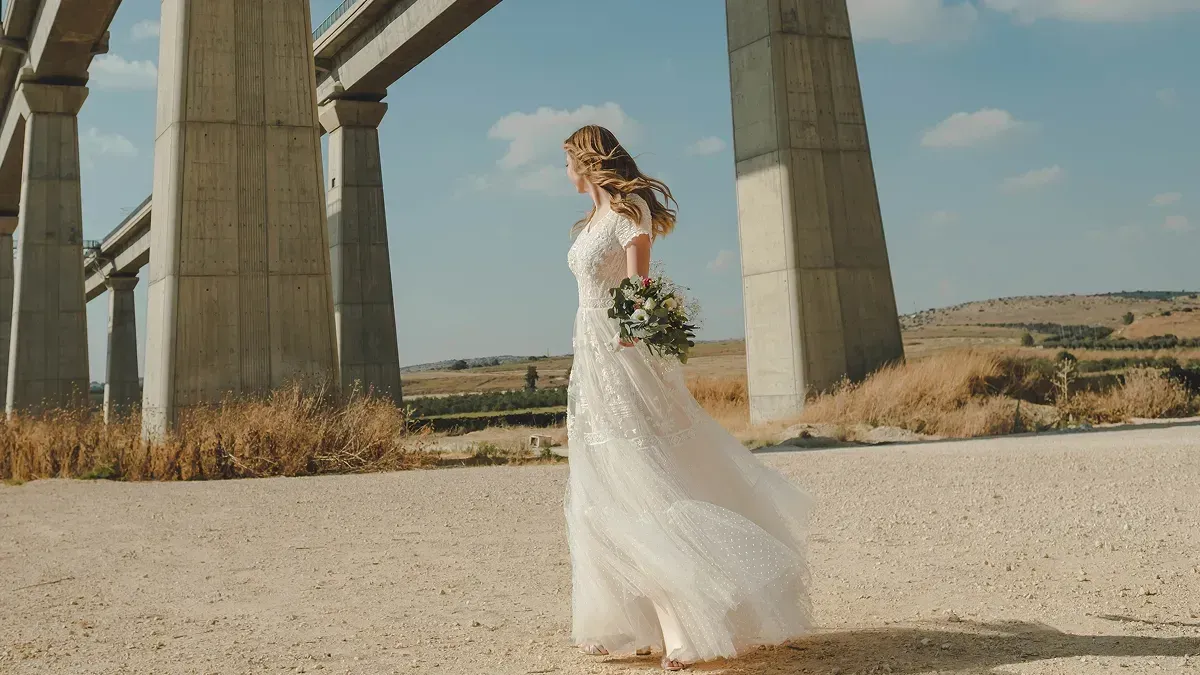
Sometimes the vows land at noon and the sun is straight overhead. Harsh midday light creates raccoon-eye shadows, blown highlights on foreheads and shoulders, and squinting subjects, so your job is to move people out of the worst of it. Open shade is your best friend here. The edge of a tree line, the shadow side of a building, or a covered porch gives you even, directional light without the ugly contrast of direct sun.
When you cannot find shade, put the sun behind your subjects and expose for their faces, then lift the foreground with a reflector or a touch of fill flash. A translucent scrim held over a small group softens the light for tight portraits. The one thing to avoid is placing people in dappled light under sparse leaves, because the mix of hot spots and shadow across a face is far harder to salvage later than clean open shade.
Use Backlighting for Depth and Glow
Backlighting, placing the sun behind your subjects, is where outdoor weddings turn cinematic. A low sun behind the couple produces rim light around hair and shoulders, glowing veils, and that hazy, romantic separation from the background. Meter for the faces, not the bright sky, so your subjects stay properly exposed while the background rolls into a soft wash of light.
Watch for lens flare when you shoot into the sun, because a little adds atmosphere and too much kills contrast and detail. Use a lens hood, and slightly change your angle so the sun grazes the edge of the frame rather than sitting dead center. A hint of fill from a reflector or off-camera flash keeps eyes from going muddy. Backlight plus a small kiss of fill is the recipe behind most of the outdoor wedding portraits people frame on their walls.
Pack Gear That Keeps You Covered Outdoors
Outdoor work asks more of your kit than a controlled indoor space does. A two-body setup saves the day, letting you carry a wide zoom on one and a fast prime or short telephoto on the other so you never miss a moment swapping lenses in the wind and dust. A fast prime in the 50mm to 85mm range delivers the shallow depth and low-light reach that golden-hour portraits love.
Beyond the cameras, a few items earn their place in the bag every single time. Bring a reflector for fill, at least one off-camera flash for harsh sun and after-dark receptions, and far more batteries and cards than you think you need, because heat and cold both drain power faster outdoors. Lens cloths matter when sea spray, pollen, or humidity coat your front element. Pack it all in a bag you can carry across a field, because outdoor venues rarely put you ten steps from your car.
Run Group Shots Fast and Clean
Family and group photos are where outdoor timelines quietly fall apart. Bright sun, uneven ground, and thirty relatives with opinions can burn half an hour you did not budget. Build your shot list with the couple in advance, group it so people are added and removed efficiently, and hand a printed copy to a confident family member who can call names while you work the camera.
For light, position the whole group in open shade or turn them so the sun is at their backs, then use fill to keep faces bright. Watch the row behind the front line for squinters and blinkers, and take two or three frames of every combination so you have a clean version of each face. Working outdoors, a slightly raised position, a step stool or a low wall, helps you see the back rows and keeps everyone’s eyes lifted toward the light.
Build a Real Weather Backup Plan
Outdoor means at the mercy of the sky, so a professional always has a plan B before the day begins. Walk the venue ahead of time and scout covered spots, a barn, a wide porch, a stand of trees, that work if rain arrives. Talk with the couple about their comfort level, because some love the drama of a moody overcast sky or a few shots under clear umbrellas, and others want to move indoors the moment it drizzles.
Gray, overcast light is not the enemy many photographers fear. A cloudy sky acts like a giant softbox, giving you even, flattering light with no harsh shadows, which is ideal for portraits and detail shots. The real risks are rain on your gear and flat, dull color, so bring rain covers for your bodies and lenses and know that the color and contrast of an overcast set can be brought back to life in editing. Prepare for the worst, and you can shoot with confidence in whatever the day hands you.
Bring the Whole Day to One Look With AI Editing
Here is the honest problem that outdoor weddings create for your editing desk. A single day can swing from cool morning shade to warm noon sun to golden-hour backlight to a blue after-sunset reception, and every one of those moments records a different white balance and exposure. Matching a thousand frames from that many lighting situations into one coherent gallery by hand is the part of outdoor work that eats entire weekends. This is exactly where AI editing earns its place in the workflow.
Imagen is a desktop app for Mac and Windows built for photographers who deliver whole shoots, and its new Studio lets you cull, edit, review and export in one project. You point it at the full wedding, and it culls the near-duplicate bursts down first, then applies color correction, exposure, and white balance in your own consistent style across every frame. The shade ceremony, the harsh-sun formals, and the golden-hour portraits come back looking like one gallery instead of a patchwork of separate lighting. Imagen reports that the first batch finishes in under 10 minutes, which is the difference between grading tonight and grading all weekend. Where a single frame needs individual attention, the AI Assistant handles the exceptions per photo, including object removal for a stray trash can or an exit sign that crept into the background.
Pricing is pay-as-you-go: you pay for the photos you export. You see every edit in the gallery before you export, so you can test the batch on a real wedding before you commit. One honest limit is worth stating plainly. Imagen grades, culls, and finishes the light your camera actually recorded, and it does not sharpen or deblur a soft or missed-focus frame. Nail focus and exposure in the field, and the tool brings your whole variable-light day to a single, consistent look fast.
Keep Learning the Craft
Great outdoor wedding photography is a loop of shooting well and finishing efficiently, and both halves reward study. If you want to move faster after the wedding, read our guide on how to edit wedding photos faster with AI. To sharpen the in-camera decisions that make outdoor light work, see our breakdown of wedding photography camera settings. You can also browse the full library of photography workflow tips for more on culling, batch editing, and delivering galleries on deadline.
What’s new in Imagen: Imagen has become an intelligent, agentic Studio for professional photographers: one project where you cull, edit, review and export together, in any order. For a wedding that moves from shade to golden light, you can edit in your own style with a Personal AI Profile learned from your past edits, or start from a ready-made AI Profile. The Studio is rolling out gradually as a beta, and edited photos arrive in batches as they process.
Frequently Asked Questions
What is the best time of day for outdoor wedding photos?
Golden hour, the roughly sixty minutes after sunrise and before sunset, gives the softest and most flattering light for outdoor wedding photos. Whenever the timeline allows, place the portrait session near sunset. If the ceremony falls at midday, move people into open shade or backlight them and expose for their faces to avoid harsh overhead sun.
How do you shoot outdoor weddings in harsh midday sun?
Move subjects into open shade, such as the edge of a tree line or the shadow side of a building, for even light without heavy contrast. When shade is not available, put the sun behind your subjects, expose for their faces, and add fill with a reflector or flash. Avoid dappled light under sparse leaves, because mixed hot spots and shadows across a face are very hard to fix later.
What gear do you need for outdoor wedding photography?
A two-body setup lets you carry a wide zoom and a fast prime without swapping lenses in the field. Add a fast prime in the 50mm to 85mm range for golden-hour portraits, a reflector for fill, at least one off-camera flash, and far more batteries and cards than you expect, since heat and cold drain power faster outdoors. Rain covers and lens cloths round out the kit.
How do you handle rain or bad weather at an outdoor wedding?
Scout the venue ahead of time for covered backups like a barn, porch, or stand of trees, and agree with the couple in advance on when to move indoors. Overcast skies are not a problem, because clouds act like a giant softbox for even, flattering light. Bring rain covers for your gear, and know that flat color and contrast from a gray day can be restored in editing.
How does AI editing help with outdoor wedding photos?
Outdoor weddings record many different white balances and exposures as light changes across the day, which makes a consistent gallery slow to build by hand. A desktop app like Imagen culls the shoot, then applies your consistent color, exposure, and white balance across every frame, with edited photos arriving in batches, the first in under 10 minutes, so you can start reviewing the ceremony while the reception frames finish. It grades and finishes the light you captured, but it does not sharpen or deblur a soft or missed-focus frame.

